Titus 3:12-15, Grace for All of It!

All by grace, and grace for all!

  1. Grace for sending and going (v. 12-13)
  2. Grace for staying and serving (v. 13-14)
  3. Grace for greeting and loving (v. 15)

Grace: “of the merciful kindness by which God, exerting His holy influence upon souls, strengthens, increases them in Christian faith, knowledge, affection, and kindles them to the exercise of Christian virtues” (Strongs).

****************************************************************************

I’m old enough to remember a world without internet, without cell phones, or social media. I remember the first time I logged into Prodigy (pre-internet) and was allowed to have a pen pal from overseas. It was amazing to have a letter back in days instead of waiting weeks (or months) for snail mail to arrive and return. I remember when we upgraded to AOL and the “You’ve Got Mail” era. I can’t imagine what the mail system in Paul’s days might have been like, but they had to plan ahead a LOT better! God built the desire to be connected into us when He created us, and you do what you have to do to stay connected to the ones you love.

Do you remember those world wide web map images? You know the ones where major cities are lit up and connected by jumping arcs? This is the image of the gospel network that that I have in my head as I read these closing verses. We see sending and going, staying and serving, greeting and loving. It’s all by grace! And there’s grace for all of it! God’s grace is lived out as we devote ourselves to God and to good works. Devoting ourselves to good works is the theme of this text (or the whole chapter); in many ways, it’s the theme of the whole letter. Yet, another theme emerges that ties it all together: Grace. So we’re going to look at how grace is connected to each aspect of Paul’s closing remarks.

But first, we have to define grace. When I say, “There’s grace for all of it,” I want to be clear we are NOT using this word as an excuse for failure or a defense to neglect good works; we don’t get to ignore God’s commands and then say, “Well, there’s grace for that.” Grace certainly includes forgiveness for sin and failures, but it’s much more than that. I wrote out the Strong’s Concordance definition on the board because I think it encompasses the full riches of God’s grace really well: Grace: “of [or related to] the merciful kindness by which God, exerting His holy influence upon souls, strengthens, increases them in Christian faith, knowledge, affection, and kindles them to the exercise of Christian virtues.” Or a condensed version, “to be committed or commended to the protecting and helping favor of God.” Grace is not only God’s salvation and forgiveness (God’s Riches At Christ’s Expense), but also His empowering strength to do what He calls us to do.

I copied a map of Paul’s missionary journeys from the back of my Bible, then I drew lines for Paul’s letters (where he was and where the letters were sent to). [show map] Imagine if we were to add more lines for Titus’ travels, then Timothy’s, then each of the other travelers and apostles that went out, just like Paul did. Then you add each of the saints’ lives and ministries, through the years and centuries.

Transition: The gospel gives birth to this beautiful network of gospel servants. Let’s take a sneak peek into the lives of those mentioned here, and God’s…

I. Grace for Sending and Going

    Titus 3:12 “When I [Paul] send Artemas or Tychicus to you [Titus], do your best to come to me at Nicopolis, for I have decided to spend the winter there. 13 Do your best to speed Zenas the lawyer and Apollos on their way; see that they lack nothing.”

    We have to start with “Paul, a servant of God and an apostle of Jesus Christ, for the sake of the faith of God’s elect … By the command of God our Savior, who entrusted and commanded Paul to preach the gospel abroad to the Gentiles, bringing them … Grace and peace from God the Father and Christ Jesus our Savior”(Titus 1).

    Paul had vision and had to make a lot of decisions that involved a lot of peoples’ lives! God transformed his zeal from persecutor of the church to passionate proclaimer of Christ. In many of his letters, Paul writes of various men and women as co-laborers, partners, fellow ministers, beloved brothers, and so on. When Paul said, “Go there” or “Come here,” his partners listened. They had a common goal—to tell the world about Jesus. By grace and through the Spirit’s power and guidance, Paul became a logistics coordinator. He made plans, but he held those plans loosely in order to follow the Spirit’s direction.

    In this text, we see Paul having made the decision to spend the winter in Nicopolis, on the West Coast of Greece. He wants Titus to finish this task of organizing and setting up the elders in the churches on Crete and sail to Nicopolis before winter hits. Titus was given a deadline, and it came with significance. Paul knew from experience that sailing in this area in wintertime was dangerous that time of year. Acts 27-28 recounts Paul urging sailors not to leave Crete, being ignored, setting sail, and ending up shipwrecked in Malta.

    Nicopolis means “Victory City!” What a base! A city that was created to boast Augustus’ victory over Marc Antony in the first century was now being used as a gospel headquarters, likely to debrief and train Titus and others on how to share the victory of Christ over the curse. This was a chance for one-on-one discipleship, exhortation, and even refreshment in the Word.

    Application: We all make multiple decisions every day—I’m sure Paul understood “decision fatigue” well! There’s grace for that too! Strength from God to do whatever He calls us to do. As we walk in the Spirit, we can make decisions, being confident that God’s grace is sufficient for each one, from what color of curtains might reflect the beauty of the gospel in our homes to what city we should be living in to “spread the unsearchable riches of Christ broader in the world and deeper in the church.” Decisions about what activities to participate in; how busy will you allow your family calendar to be? Decisions about menus and bills, doctors and care plans, schooling and jobs. There is grace for big and small decisions, and we can rest in God for all of it!

    Maybe you’re in a season of traveling—either for work or for caring for family members. We’ve been there. The drive between Greenville and Ohio is familiar and not short! God’s grace is there for every mile. I wonder if Paul had Ezra and Nehemiah in mind during his travels; these books reference “the hand of our God upon” His people at least 8x. In Ezra 8, Ezra is getting ready to return to Jerusalem from exile with a group of Israelites; he begins his journey by proclaiming a fast and praying: “that we might humble ourselves before our God, to seek from him a safe journey for ourselves, our children, and all our goods.” Why? He had told the king, “The hand of our God is for good on all who seek him.” He didn’t want to ask the king for protection because he wanted the king to see God’s rescuing hand on the people, and God listened and delivered them from ambushes on the way! When Nehemiah recounted “the hand of my God that had been upon me for good,” the people responded by strengthening their hands for the good work of rebuilding! “Let us rise up and build!” (Neh.2:18). God’s good hand of grace is on ALL those who seek Him, and He uses testimonies of that grace to strengthen our hands for good works.

    Next, we look at Titus. Titus did the good work God thru Paul had called him to do. And now it was time for him to say goodbye. You know, I’m sure a lot of these believers truly loved Titus as a spiritual father and brother. Seeing him leave would have been very hard. Being told that someone else will be taking Titus’ place, and that they would need to submit to new eldership, was probably hard news. Thankfully, God gives Grace for Transitions!

    Paul said he would send Artemus and/or Tychicus, so one or both would be replacing Titus. Now, Artemus is not mentioned anywhere else in Scripture, though tradition lists him as one of the 72 disciples that Jesus sent out in Luke 10, which just heard preached these last two Sundays! Tychicus we know more about—He was Asian and worked with Trophimus and Onesimus; he waited for Paul in Troas with a group of coworkers (in fact, he was likely in the room when Eutychus fell out of the window and was brought back to life by God through Paul in Acts 20). Paul referred to Tychicus as a “dear brother and faithful servant in the Lord” And in both Ephesians and Philippians, Paul is clear that Tychicus was an encourager. So, he wasn’t leaving the church stranded. He was sending faithful men to continue the gospel work.

    God does this today too. Sometimes, you’re the one actively moving on. More often, you’re on the passive end of seeing others being moved on. But regardless of who is moving (or being moved, rather), there is grace for transitions. When your elder changes—whether they step down from being an elder or move to a different state or ministry, or when you change shepherding groups and the elder assigned to you or your family is new, how do you respond? Each shepherding group has its own dynamic, and every elder has his own personality. We can respond humbly and submit ourselves willingly to all of our elders. In fact, we must! Discipleship is part of sanctification, and even these changes are sovereignly ordained to grow us.

    Life is full of transitions, and they often involve sorrow, and even deep grief. But there is Grace for developing a Gospel Perspective about this, a heavenly perspective, about God’s sovereignty. Ultimately, God is the One actively moving His people where He will, and we get to see it and grow in grace because of it. I think some of the people in Crete probably felt about Titus like my son (and some of your kids) felt when the Farmers and Hansens left this last time. He came to the car after their last game of Gaga ball and said, “Well, I said goodbye,” and promptly burst into tears. Transitions are hard, but God’s grace gives us an eternal perspective. This life is short, and we must stay on mission for His Kingdom. We remind ourselves that one day, all of us in the faith will be together again, in Heaven, and we will never run out of time. There is grace for loving each other in separate corners of the world and longing to see each other again. And there’s grace to be faithful wherever God sends you or plants you.

    Next, we meet Zenas and Apollos.

    v13,”Do your best to speed Zenas the lawyer and Apollos on their way; see that they lack nothing.”

    This is the second time we’ve seen the phrase, “Do your best.” It has the idea of being diligent, or “make every effort.” We must recognize our best still demands God’s grace! It’s not a demand for perfection. Only Jesus, our Good Shepherd, can truly see that we lack nothing (Psalm 23). But the Lord graciously allows us to be used in this ministry to one another.

    Now, this pair is likely the ones carrying the letter, and they probably had other letters from Paul to deliver to other cities. So it’s important they have what they need to keep on mission. They don’t have time to be distracted. All we know of Zenas is what we see in this verse: he’s a lawyer—either he was an expert in Jewish law OR an expert in Roman law, since the Cretans were devoted not only to Jewish myths, but also human (Roman) laws (1:14).

    Apollos, on the other hand, is a fairly well-known teacher of God’s Word. It’s possible they would not have only carried the letters but also been the ones to read them aloud in the church gatherings. This makes sense to me, when you read Acts 18. Apollos has a vast knowledge of the OT, is a bold teacher, a humble disciple, and he has experience refuting Jewish opponents in Achaia, proving thru debate that Jesus is the Messiah; this makes him a good candidate for refuting Jewish myths in Crete as well. His ministry was evidently so fruitful that the church began to divide—“I am of Apollos; I am of Paul” (1 Cor. 1:12; 3:4-9, 21-23).

    The fact that these two men were paired up seems intentional to me. It’s almost as if Paul is modeling this older and younger mentorship that he’s commanding the church in Crete to practice even in his choice of letter carriers. Or maybe they were paired up to refute both Roman and Jewish false teachers. Whatever the reason, Titus was told to show these two men hospitality: you, Titus, make every effort to get them back on the road; give them whatever they need—clothes, a bed, food, encouragement. Titus had a chance to model hospitality in front of the church by how he treated these mission partners.

    Transition: Along those lines, we come to our next point. Now, it’s the church’s chance to practice hospitality and the Spirit’s fruit of good works too. While the leaders were transitioning, the people didn’t have that option. So, God gave

    II. Grace for Staying and Serving

      v14,“And let our people learn to devote themselves to good works, so as to help cases of urgent need, and not be unfruitful.”

      Our people are those with a common faith in Jesus Christ as Lord and Savior, and a common love for one another. The NIV says, “Our people must learn to be devoted to good works.” Learning implies being taught. This connects us back to the instruction and rebuke of the elders (1:9-10), of the older men and women (2:1-6), and ultimately, the training of our good God and Savior Jesus Christ (2:12). It means we’re not going to get it right initially, or independently, or even intuitively. We have to grow in this. We’re not born knowing how to be good. One, it’s a work of the Spirit to regenerate us—giving us faith and new life. And then it’s a work of the Spirit to train us to renounce ungodliness and grow in being zealous for good works. This takes time! And consistent reminders.  

      We need each other and we need the Word—which is “breathed out by God Himself and profitable for teaching, rebuking, correcting, and training in righteousness, that the servant of God may be thoroughly equipped for every good work.” (2 Tim. 3:16-17). We need the Church, working together as God intended it. It means we’re going to mess up—a lot! And we’re going to have to learn repentance and forgiveness. It’s not an overnight process, but a lifelong one. Thankfully, there is grace for all of it! Grace to give and receive correction; grace to repent and to forgive; grace for learning and devoting.

      Next, we see grace for good works. Especially, good works that meet urgent needs. Who is in urgent need around you? Keep your eyes and ears open. Who is caring for sick kids or aging parents? Who are the widows or foster parents? Our shepherding groups and elder communities are set up in a way to be the first line of support on these immediate needs. And if you have an immediate need (or concern), the first people you should call is your elder and shepherding group leader. We have to be aware of needs in order to try to meet them. And God’s grace is sufficient to meet all of our needs.

      God’s grace is also there for when others are better suited to meet those needs. We are not going to be able to meet every need we hear about. While some of us need to be encouraged to be more aware and active, others of us need to learn to set up boundaries. None of us are the Savior; there is only one of those—and His name is Jesus. And by His grace, He saved us and trains us to do these good works. If you’re not sure how to set those boundaries, this would be a great conversation to have with your elder or elder’s wife, your shepherding group, or some women who you know are serving the church well but also don’t seem completely overwhelmed. This is part of that learning to devote ourselves. We want to be profitable and productive in the good works God has created for us to do (Eph. 2:10).

      In order to be devoted to good works, we must first be devoted to the One who created them. Even though the emphasis of the chapter is on good works, our works do not save us; God saved us by His good kindness and mercy, and He is the One causing us to obey and live godly lives, filled with the fruit of good works for God’s glory and mankind’s good.

      Devotion to God produces devotion to God’s people. We must first be devoted to God, and then He works in us to learn to be devoted to God’s people. And we do the good works He designed for us to do. My good works are not for you to do; and your good works are not for me to do. But we do have to actually do them. This word “good,” describing our works, means “beautiful,” and that’s what the body working together is–it’s beautiful!

      What are these good works? A lot of them are not grand or great, but the routine and regular sacrifice and service of daily life. Good works like the ones we’ve discussed all thru this letter. Let’s review…

      Chapter 1:

      • Paul’s teaching for the furtherance of the faith of the elect was a good work, which led to others’ good works, including ours! (3)
      • Titus’ good works include putting the church in order, appointing elders (5).
      • The elders’ good works include loving their families, being hospitable, living self-controlled, disciplined lives, by holding firm to the Word, and instructing and rebuking those in the church, and refuting false teachers (8-16).

      Chapter 2:

      • We see the good work of teaching older ones in the church, modeling good works and self-control (1-10).
      • The older men’s good works include acting their age and exhibiting self-control by having healthy faith, love, and steadfastness (2).
      • Likewise, the older women’s good works are exercising reverent behavior, controlling their tongues, managing their homes well, loving their families, submitting to their husbands, and training the younger women to do the same (3-5).
      • The younger men’s good works involve self-control in all circumstances (6).
      • The bondservants’ good works are to serve their masters well, adorning the gem of the gospel to shine brightly to their masters and everyone watching their acts of service (9-10).
      • Renouncing ungodliness and worldly passions is a good work; training for self-controlled godliness is a good work (12).
      • Actively waiting for Jesus to come back is a good work (13).

      Chapter 3:

      • Reminding one another to be obedient and gentle and ready for good works is in itself a good work (1-2).
      • Giving the gospel is a good work, going and coming, sending and staying, all of it is part of God’s network of good works that brings Him glory and meets the needs of God’s people (12-14). This is profitable, helpful, useful, and worthy good works.
      • And learning to be devoted is a good work (14).

      Every one of these good works is done by grace. And the product is fruitfulness. We saw this last week in verse 8; after talking about the grace of God’s salvation, Paul writes, “The saying is trustworthy, and I want you to insist on these things (stress these points)….” Why? “…so that those who have believed in God may be careful to devote themselves to good works. These things are excellent and profitable for people.” So, having a fruitful life of good works requires practice, patience, humility, discernment, teachability; it requires reaching out to ask if there is a need, and reaching out when you’re the one in need.

      TRANSITION: Speaking of reaching out, let’s read our final verse, as we see…

      III. Grace for Greetings and Loving

        v.15, “All who are with me send greetings to you. Greet those who love us in the faith. Grace be with you all.

        Greetings were a significant part of Greco-Roman culture. They often included a physical embrace or kiss on the cheek, and it signaled to anyone watching an expression of peace, concern, and respect. It wasn’t just a polite formality, but a joyful reception, a happy hospitality and mutual affection. The word “Greet” occurs 60x in the NT, in nearly every book! We see the greetings going both ways, first from Paul and “all who are with him” to “Titus”; this “you” is singular! It was likely meant to be a personal encouragement to Titus in this very challenging assignment he had been given on Crete.

        Application: Our elders need this same encouragement. I thought it might be a fitting way to end this study by having us each write a letter to our elder, so I brought some cards in the back that you can pick from (or maybe you have a card at home). Tell him how you are praying for him, how he can pray for you, and how God has been at work in you thru His Word, either from Titus or Luke, or elsewhere. Bring that card back next week for our final session, and I think it would be amazing to leave a basket of notes to our elders on the table at their next elders’ meeting.  😉 Let’s greet our elders with encouragement as Paul did Titus.

        Next, the greetings broaden to “all those who love us in the faith.” Even in this greeting, Paul was instructing Titus to only greet those who were actually joined in the faith and loving Paul and the body of Christ by being devoted to God and good works.

        Faith is always a gift of God! It is God’s divine persuasion in His people that Who He has revealed Himself to be is true and trustworthy. We cannot muster up even one ounce of faith; it is 100% a work of grace by the Spirit of God. Furthering this faith was the whole reason God called Paul to be an apostle! I praise God that my faith has been furthered by this letter to Titus. I have been challenged and convicted, encouraged, refreshed; and I have to believe that the Church at Crete experienced all these same things as a result of this letter.

        In fact, as their faith grew, so did their love for one another; this love is once again phileo—the same love that we are to have for our husbands and children (2:4) and that God had for mankind (3:4) when He appeared to save us. And it is precisely because of God’s love for us that we can love one another. “Love” is present tense, so it’s an ongoing love. God’s grace grows mutual affection for one another, despite differences of backgrounds and personalities, preferences, ages, genders, nationalities. By God’s grace, He unites us as one body with Himself! “Our people” are “God’s own people” (3:14; 2:14).

        CONCLUSION: We opened the letter with “Grace and peace from God the Father and Christ Jesus our Savior” (1:4). In chapter two, “the grace of God… appeared, bringing salvation for all people, training us” to adorn the gospel by clinging to sound doctrine and living in a way that fits with that sound doctrine. And in chapter three, it is “by His grace” that we are “justified,” becoming “heirs according to the hope of eternal life.” Now, we close this letter with “Grace be with you all.”  

        How big is this grace and love in faith? There’s grace enough that the very saints Saul persecuted and killed welcomed the apostle Paul as their beloved brother as he entered Heaven’s gates. That’s the grace of the gospel!

        By grace, He allows each of our gospel interactions to be added to this gospel network map that we talked about at the beginning (our letters and phone calls, texts and person-to-person gatherings). Each of our lives are woven together with one another, interconnected by grace and for the gospel’s furtherance. Paul’s purpose is our purpose too. God is positioning to share the grace of Jesus with the world, as we continue to learn to devote ourselves to good works by His Grace. All by Grace, and Grace for All. There is grace for all of it!

        Let’s Sing of that Amazing Grace now…

        “Amazing grace, how sweet the sound
        That saved a wretch like me
        I once was lost, but now I’m found
        Was blind, but now I see.

        “T’was grace that taught my heart to fear
        And grace my fears relieved
        How precious did that grace appear
        The hour I first believed.

        “Through many dangers, toils, and snares
        I have already come
        T’was grace that brought me safe thus far
        And grace will lead me home.

        “When we’ve been there ten thousand years
        Bright shining as the sun
        We’ve no less days to sing God’s praise
        Than when we first begun.”

        Let’s pray. God of Grace, We cannot even begin to comprehend this marvelous, merciful, matchless grace. And yet, You richly and freely pour it out upon us—in salvation, and every day after! Grace for travelers, coming and going; grace for staying and serving; grace for seasons and decisions; grace for hospitality; grace for seeing and meeting needs (especially urgent ones); and grace for the needs we’re not able to meet; grace for learning and devoting our lives to doing good; grace for greetings. We praise You, God, that there is grace for all of it, all along the way! As we wait for Your glorious appearing, may we be zealous of Your good works, walking by faith in the precious redeeming blood of Your Son, In Whose Name we pray, Amen.

        Titus 2:1-10, Adoring God and Adorning the Gospel

        The title of our Titus study is Living the Truth: Belief and Behavior that Adorn the Gospel. That word “adorn” comes from this week’s text in Titus 2:1-10. Verse 10 says, “that in everything they may adorn the doctrine of God our Savior.” It’s one of several purpose statements in this section, but it captures the essence of all of them. The word “adorn” in Greek is “kosmeo”—the same word we get “cosmetics” from. It’s the idea of putting in order or arranging in a way that makes it more beautiful or attractive. And that is God’s intent even as He calls Titus to put the church in order—that the doctrine of God might be beautiful and attractive to those who see it lived out.

        The female body is considered the most beautiful and by far the most painted, sculpted, and sketched subject in all of human history. And yet, we spend countless hours, great effort and expense adorning our bodies, trying to make them more attractive. We do this on a regular basis, but I want us to think of the image of a bride getting ready for her wedding day. She wants every detail to be perfect. Think of the care it takes to fashion a wedding gown or veil. Many of these are still sewn by hand, adding to their intricacy, value, and beauty. And that’s just the dress—there’s makeup and hair and nails, flowers and rings. All kinds of ways that the bride is adorned. This is what Jesus is doing for us, by His grace. He’s preparing His bride by arranging the Church in an order that makes it so beautiful—to God and to man. And at the same time, we adorn the doctrine of God our Savior—the gospel—the good news that Jesus came to rescue us from our sins and transform us by His grace. It’s the good news that Jesus is coming again to share His glory with His purified people.

        But as we wait for the glorious hope, we cling to this gospel—doctrine—the teachings of Jesus and His prophets and apostles, the elders of His Church—on Who He is, and how to follow Him. The gospel is beautiful. In fact, it cannot BE more beautiful; YET it can be displayed as either dull or dazzling. So, we adorn this gospel. How? We adorn the gospel by how we speak and how we live.

        Main Idea: Our words and walk must reflect the worth of the Word of God.

        I want us to see this passage, not as a list, but as one big idea: God’s word is valuable. And if that big idea is true, then how we speak and how we live matters because it reveals what we value.

        I want you to feel the sweet mentoring tone in this section. Paul speaks as a loving father to his son, who is becoming a father. And it’s like we get a little glimpse into the spiritual delivery room, as Titus looks down at these little infant churches, newly in his care, and then quickly looks up at Paul, as if to ask, “What do I do now? How in the world am I supposed to teach them how to be mature, responsible human beings?!” And Paul smiles at him, and puts his arm around him, and says, “Ok, son, this is what you’re gonna say.”

        Our words and walk must reflect the worth of the Word of God. We’ll come back and look at our words and our walk. But first, we have to get a grasp of

        I. The Worth of the Word of God. Adoring God and His Word.

          V1: “But as for you [Titus, in stark contrast to the false teachers from last week], teach what accords with sound doctrine.” This word “teach” is literally “keep speaking.” And what is Titus supposed to keep on the tip of his tongue? Everything that fits with sound doctrine—this is healthy teaching and practices for healthy souls. If it’s consistent with Scripture, keep saying it; if not, don’t. It’s that simple.

          V5: “that the word of God many not be reviled.” We value the word of God too much to live in a way that would allow someone to speak spitefully or disrespectfully of God.

          V8: we have “sound speech” (logos, literally “healthy words). And we have another “so that”—“so that an opponent may be put to shame, having nothing evil to say (lit., no evil word) about us.”

          Finally, in v. 10, we see “so that in everything they may adorn the doctrine of God our Savior.”

          As Titus speaks to the people in the churches, he’s not just preparing the elders, but in reality, the whole household of God, to live out the gospel appropriately and attractively. As they did this—as WE do this—instead of households being led astray, our faith will be furthered, our knowledge of the truth will grow, and we will live in a way that is fully pleasing to the Lord. We’ll be accomplishing those good works that God created for us to do before He even created us (Eph. 2:10).

          II. The Words and Walk of God’s People. Adorning the Gospel.

            I love the familial language in this passage—God intentionally designed the Church to work like a well-managed household. Within a household, there are roles and duties. And you don’t get to choose which role you serve in; it’s assigned; these are God-ordained roles. There’s a male father, a female mother, children (young men, young women), and possibly some household help. Each person has a purpose and specific ways in which he or she contributes to that household. And remember, I said our one big idea for today is that God’s word is valuable. So, we want to look specifically at how each of these roles reflects the value they place on God’s word. How we live (our “orthopraxy” or our practices) directly results from what we believe (our “orthodoxy” or doctrine).

            A. Older Men, v2 “Older men are to be sober-minded, dignified, self-controlled, sound in faith, in love, and in steadfastness.”

            1. They’re serious, respectable, and mature. They act their age. We want to be around men who have proven themselves in how they think, how they speak, and how they act; men who have lived long enough to stand in awe of God and know He’s worthy of respect.
            2. Sound in faith, in love, and in steadfastness. Older men have learned true, healthy doctrine—their faith clings to truth, and they pass that on to the younger generation, just like Paul did to Titus. They have a healthy love for the people of God. They’ve learned to use their spiritual gifts in the body by having an agape love that is patient and kind, not envious or boastful, self-sacrificing and rejoicing in the truth. And they’re sound in steadfastness—they have a hopeful endurance about them. They’re neither grumpy old men nor simply sentimental. They’ve weathered the storms of life and their spiritual skins have grown thick, still holding to the anchor of Jesus as their hope.

            B. Younger Men

            While we’re talking about men, let’s jump down to vv. 6-8. “Likewise, urge the younger men to be self-controlled. Show yourself in all respects to be a model of good works, and in your teaching show integrity, dignity, and sound speech that cannot be condemned, so that an opponent may be put to shame, having nothing evil to say about us.”

            This section is short and sweet. As a boy mom, with 3 boys, I completely get why the one thing Paul tells Titus to teach the young ones is self-control in all things. But what I love here is how? “urge” or “encourage” ; ‘parakaleo’ means coming alongside; it’s a word used of the Holy Spirit, our “Comforter,” the one who “calls us close.” It’s this arm around the shoulder, side by side, encouraging mentorship going on. It’s John Gardner, taking my son aside at a funeral and asking him, “Do you see your mom’s sad? How can you help her? Are you being respectful?” It’s my dad, looking around and inviting men he knows to gather around his kitchen table and talk about a book of the Bible. When an older man calls a younger man to come alongside and learn self-control from him, and the younger man listens, and learns, that’s reflecting he values the Word of God.

            And Titus does this by modeling it. It’s not just words, it’s that life on life discipleship. Titus is told to mirror Christ in his good works and in his teaching… he’s to show integrity, dignity [seriousness], and sound speech that cannot be condemned.  “Follow me as I follow Christ” (1 Cor. 11:1). Who else uses selfie mode on your phone’s camera as a mirror? As we adorn the gospel, reflecting its beauty, what kind of mirror are we using? A compact mirror or a full-length version? What if we used the word of God like that? Would our teaching and tongue and tone reflect a beautiful gospel? Or does it look like a distorted mirror in a funhouse?

            C. Older (and Younger) Women

            Okay, so I want us to look at this text as one chunk to the older women. This is how Calvin saw this passage, based on the “to be” phrase throughout. It’s a grammar thing, and I think it makes sense because in order to train the younger women, the older women would have had to learn and practice the whole list first. And younger women, that means this whole list is for you too, as you train to become older women in the body of Christ.

            v. 3-5, “Older women likewise are:

            • to be reverent in behavior, not slanderers or slaves to much wine.
            • to be teachers of what is good, and so train the young women
            • to be lovers of their husbands
            • to be lovers of their children, 
            • to be self-controlled,
            • to be pure,
            • to be working at home,
            • to be kind, and
            • to be submissive to their own husbands, that the word of God may not be reviled. 

            Let’s look at a few key ideas here and how the way these women live adorns the gospel.

            • To be reverent in behavior, not slanderers or slaves to much wine.

            Reverent has the idea of “befitting a holy person or thing,” like a priestess in the temple—I have the image of Anna in the temple when she sees baby Jesus for the first time; she’s waited her whole life for her Savior, and she recognizes Him when He comes. Reverent has the idea of someone in the presence of God. She lives in the Word of God, letting it sink down deep, and then she submits herself to it and is changed by it! And she glows with the glory of God, living like she was on that mountain with Moses, her face shines. I want to be that kind of woman. Don’t you? Let’s practice the presence of God. This isn’t just studying God’s Word. You can go to all the Bible studies in the world, but if you’re not willing to submit yourself to what God says to do, your life shows that you don’t actually value God.

            Older men and older women are both told to be “sober-minded” or “not given to much wine.” These ideas are parallel. The reality is, the greater the age, the greater the aches and pains. Wine would have been what they had to ease their pain—physically and even life’s heartaches. [Psalm 104:15 tells us the LORD gave “wine to gladden the heart of man.”] Even a good gift can be abused though. The culture around them (and let’s be honest, around us too) gives into one more glass and one more glass, and as their bodies loosen up, so do their tongues. And they begin to speak maliciously—gossiping, putting others down. This word “slanderers” is “diabolous” (accuser, the same word used of the devil himself). As Christ followers, our words and conduct reveal who we are serving and what wisdom we are following—we are to be servants of God not wine—and our speech is to reflect heavenly wisdom, not devilish.

            • To be teachers of good and this teaching has a focus—SO THAT they can train the younger women.

            This is not calling every older woman to lead women’s Bible study! (Some of you are relieved by that.) In fact, there wasn’t a formal lecture or classroom setting available to them. This isn’t necessarily deep theological training. This is the practical life stuff, and a lot of this is domestic. How in the world do I get that stain out? How do you get your bread to rise so beautifully? How do I figure out what my priorities need to be? It’s personal, one-on-one discipleship. If you don’t have a spiritual mom or grandma in this church, look around this room, your small group, your shepherding group, and think, “Who do I want to be like when I grow up?” Invite her over for coffee. Older ladies, you do the same, “She reminds me of me when I was her age. What would I tell my younger self?” Invite her over for tea. Dig in the garden, bake bread, play with the kids. Just do it together. And talk about Jesus while you do it.

            This training word literally means, “to make of sound mind” or “restore to one’s senses.” This is helping someone hold to their duties, admonishing, earnestly exhorting, curbing our affections. This is discipleship! We need one another to help us think rightly! Don’t get me wrong, we need the weekly teaching and preaching of our elders, but God designed us to need discipleship too. This is a special role reserved for the older women of the faith. [Several commentaries actually said that one reason this kind of instruction was to be given thru the older women instead of thru the elders was actually to protect both parties from forming attachments that could lead to sinful relationships and harm the gospel. Every church needs mature women in the faith to do this.] As we age, we never retire from usefulness in the church. If anything, it’s the exact opposite. As we mature in the faith, our role is not just useful but essential, critical to the life of the body. This is what you’ve trained for—to train the younger women!

            • V.5-6, We’re called to be lovers: husband-lovers, children-lovers, home-lovers

            Notice, it doesn’t say the women have to be married; it’s that same mentality we saw with the elders—their values about marriage reflect biblical teaching: one man, one woman,  faithful till death. If you’re married, notice the order here…our husbands come first, before our kids, before our homes. This love is the “phileo” love, the familial, friendship love. You surprised? It’s not just attraction or even the self-sacrificing kind (that falls more under the submission, we’ll get to in a minute). It’s showing affection with a tender touch, welcoming him as a friend, working hard to be interested in him & his interests, and that includes making it possible for men to develop male friendships—send them out for coffee or pizza, and pray for them while they’re out. We need older women to help us love these very different-from-us creatures. God designed it to be possible.

            Next, it’s the same affectionate love for children—biological, adopted, or spiritual children, like Paul loved Titus as his “true child in the faith.” Loving our kids well can be hard, messy maddening, heartbreaking, and sometimes completely overwhelming. When we hit that wall, we don’t need another book or YouTube. We need older women in our church to be right up in our business, praying with us, holding us, reminding us that they’ve been there, and that God’s grace is too glorious for us to give up on our families. He will get us through!

            Let’s skip ahead to that “home-lovers” as JB Phillips paraphrased this “working at home” bit. This doesn’t mean you can’t have a career or work outside the home, but it carries the idea of being a good household manager. We’re busy at home; not busy-bodies around town. We need to learn to love the homes God has given us, to manage them well, to maintain them, and to make them a priority for the glory of God. And if we can’t work outside the home and be this, we need to reevaluate our priorities. One of the best exercises I ever did was to write down my top 10 priorities and then put that list in the order that I was realistically living it out. My priorities were completely out of whack and I had to quit a job I loved because my husband, my family, my home, had to be more important than I was making it.

            • To be self-controlled, pure, … and kind

            When we fix our minds on the word of God and value it as our supreme authority, we beg God to grow this fruit of self-control and kindness in our hearts, and in our homes. We remember that Jesus was kind and tenderhearted to us, forgiving us, and we can be kind and forgive too. We need to be pure in what we put in front of our eyes. When you’re watching TV or scrolling Instagram, and you find yourself comparing your husband in a critical way, or you find yourself cheering for a relationship that isn’t biblical. Don’t get your marriage advice from the world. Turn off the TV, stop scrolling, and call a grandma. Fix your mind on things that are good and pure and true, and commit again to being faithful to God’s word and your marriage vows and not let your heart wander.

            • To be submissive to their own husbands

            In a believing household, placing ourselves under the authority of our husbands should be joyful, because it also means placing ourselves under his provision and care and affection. If your husband isn’t saved, 1 Peter 3 tells us “this is how the holy women who hoped in God used to adorn themselves, by submitting to their own husbands” and your submission may be what wins your husband over to Christ. It’s hard, but it’s holy work.

            In my experience, when I submit to my husband, it actually makes him a stronger leader. When I try to lead, I’m stripping him of the respect I vowed on our wedding day; I’m acting like Eve instead of Mary. This isn’t being a doormat; it’s honoring the God-ordained roles He created you to serve in. If this is weighing on you, I’ll say it again, “Call a grandma!” You don’t get to be one of those cute old couples sitting in Cracker Barrell without a lot of years of sacrifice and love before that point. When I let the word of God change my heart towards my husband through prayer and active obedience, it’s always worth it.

            So, what’s your place in God’s household? Older or Younger—probably a little of both for most of us. Are you humbly submitting to it? And reflecting that you value the gospel by your speech and behavior?

            D. Our final group is Bondservants, v. 9-10

            “Bondservants are to be submissive to their own masters in everything; they are to be well-pleasing, not argumentative, not pilfering, but showing all good faith, so that in everything they may adorn the doctrine of God our Savior.”

            In Ancient Greek comedies, the term slave and thief would have been interchangeable. It was so common it became a societal joke. And yet, the gospel is for everyone, regardless of status or occupation. These bondservants heard the good news and received Jesus. He changed them from the inside out! They were free from sin, but they were still slaves on earth. Now they needed to reflect that change to their masters. They had to be taught to do this in very countercultural ways! Serve humbly, no matter what because Jesus humbled himself, submitting to the will of the Father in EVERYTHING for us. Be pleasant to be around. Being under God’s authority doesn’t give you the right to act like you’re superior to your master; don’t argue; don’t talk back; don’t mock. That doesn’t reflect the beauty of the gospel that you treasure. Show you can be trusted in everything. You don’t need to steal anything; the King of the Universe is your Father now! Stop this petty theft—a few extra pieces of food here, a couple of coins there, a few extra minutes on the time clock this day, etc. Your reward is in heaven. But serve Jesus now by serving your earthly master well.

            CONCLUSION: I want to go back to the bridal picture we started with and think about the ring. John Stott writes, “The verb kosmeo [adorn] was used of arranging jewels in order to display their beauty. And the gospel is a jewel, while a consistent Christian life is like the setting in which the gospel-jewel is displayed; I can ‘add lustre’ to it (REB).” (185) God chose to set the jewel of His gospel in the setting of His Church so that we might radiate His glory. Have you seen the splendor of the gospel and accepted the treasure of Jesus as your Savior? If not, come, repent of your sin and believe in Jesus—trust this beautiful doctrine of God our Savior that is free for all. And then, sisters, take care of the setting of the gospel—take care of how you live in the church, in your home, in your community, and may your words and walk reflect the immeasurable worth of God’s Word among your sisters today.

            Sing “I Love to Tell the Story” OR “May the Mind of Christ, My Savior”; and Pray

            Titus Toolbox: An Introduction to Studying Titus

            Our goal for women’s Bible study is to equip you to enjoy God’s Word and to be transformed by the truth of it. While not the primary source of teaching at Heritage (that would be the pulpit ministry during our Sunday gatherings), Women’s Bible study is a wonderful gift. And we’re thankful for the opportunity to gather and read and discuss and grow in our understanding of God’s Word together.

            The number one thing we want you to do with Bible study is value God’s word so that you can submit to it and be transformed by it. The Word of God is a means of grace to His people. Other means of grace (or, how you get grace) are prayer and the Church. So, that’s why we are practicing this with other sisters. Because God graciously uses all of His people to help one another grow in grace and in the knowledge of the Truth, so we can live godly lives. And that is what the book of Titus is all about! Grace and Truth lived out.

            TOOLBOX ILLUSTRATION: If we were gathered around my kitchen table instead of here today/tonight, you’d notice that we’re in the middle of a minor renovation, building in a pantry and bookshelf. I’m really thankful for a handy husband who is still eager to learn new skills, especially from his dad (who’s a retired construction superintendent). Bryan’s dad didn’t really teach him the trade as they were going up, but it’s important to Bryan now to say, “Dad, I need to know how to do this. Can you help me?” And it’s fun to watch the two of them teach our 3 boys the different tools and how to use them. They’ve been running around with tape measures measuring everything! So, I brought a toolbox here (visual aid) and it’s filled with tools (or objects that represent those tools) that I’ve found helpful over the years in studying and working to understand God’s Word. Some tools are more helpful in specific types of Scripture, and some are helpful for all of Scripture. And just as in construction, these tools take a little practice.

            TOOLS:

            • Bible (Scripture Journal) – The Bible the living, inspired Word of the eternal God. These Scripture journals aren’t necessary, but they are helpful for note taking and highlighting in ways you might not want to mark up your Bible permanently.
            • Workbook – see appendices for different questions you can ask of Scripture. And we’ve tried to be really thoughtful in how we’re asking the questions in our workbooks. Especially for those who maybe haven’t done a lot of Bible studies, we want to give you a framework to come to Scripture with good questions and ask God to help you answer them about the Word He’s given you.
            • PRAYER (object lesson: phone, represents us calling out to God) – John 17 tells us that the Holy Spirit is the Spirit of Truth, guiding us as believers into all truth. In Proverbs 2, it tells us that God has storehouses of wisdom that He is ready to pour out on the righteous. And in James 1, He tells us that He loves to give wisdom generously to those who ask. So, always start by asking for wisdom as we approach God’s Word. We tried to model this as we wrote the workbooks this time as well. There are prayers that you can use as launching points at the beginning and end of each week’s lesson.

            WORKBOOK QUESTIONS ON PAGES 2-3 (AND MORE TOOLS):

            (Q1) What genre is the book of Titus? (What type of literature is the text?)

            TOOL: READ AND REREAD (AND/OR LISTEN) – There’s value in reading things over and over again. And in our day and age, we have several solid translations that we can use. The Bible App is really helpful for listening (6.5 minutes to listen to the whole book of Titus).

            (A1) As we read through Titus, we notice a few things… it’s a letter. So, we know we’re in the EPISTLES or LETTERS GENRE.

            TOOL: ENVELOPE – Now, the original letters were probably written on scrolls, so no actual envelope, but the letters contained the features that would be on our modern envelopes. It includes who wrote the letter, who the letter was to, where it was sent from, and when it was written. Now, some of this is in the letter itself, and some we have to do a little research for.

            (Q2) Who wrote the book? (A2) Paul. Now, we’re not going to look too deeply into Paul in today’s lesson because our study next week covers chapter 1:1-4, so Amina will cover Paul’s background next week. But we’re just getting the main ideas here and working on our toolbox.

            (Q3) When was it written? Did you read the letter before coming tonight? Good! Did you find a date in the letter to Titus? Me neither!

            TOOL: STUDY BIBLE/COMMENTARY 

            • We would recommend the ESV Study Bible or the NIV Biblical Theology Study Bible. If you don’t own a study Bible, that’s ok. Because most of this information can be found online for free; if you’re not sure of authors to trust, ask an elder or one of the other teachers here at Heritage for recommendations.
            • Crossway and The Gospel Coalition (TGC) have some really good resources and free courses on their websites to help with this.
            • The Bible Project has free videos on YouTube that cover every book of the Bible (some of their newer videos should be viewed with discernment, but the book overviews are very helpful).

            (A3) Short answer: between AD 62-66.

            When we compare these resources, it seems likely that this letter was written sometime after Paul’s first imprisonment in Rome (released AD 62; see Acts 28, so most of the events in Acts have taken place, including all 3 missionary journeys). Since Paul wants Titus to join him in Nicopolis by winter, it’s likely that Paul’s either already in Nicopolis or visiting some churches on his way there. And we know Paul was imprisoned in AD66 until he died a martyr under Nero in AD68.

            It’s believed Paul wrote Titus in between writing 1 Timothy and 2 Timothy, so there’s a lot of similarities in the Pastoral Epistles. You might want to take your Scripture journal and read thru all 3 letters and see what similarities you can find.

            (Q4) Who was Titus written to?

            (A4.1) A little self-evident by the title and Titus 1:4, Titus is clearly the immediate recipient.

            Not to give away too much about Titus, but we know he was an uncircumcised Greek who trusted Jesus Christ as His Savior. The fact that he was uncircumcised will be valid as he refutes the Jewish circumcision party at the end of chapter 1.

            Titus traveled with Paul on several of his missions, and clearly had some administrative gifting, or he would not have been tasked with the contents of this letter.

            (A4.2) Titus is written in a way that is calling out certain activities and calling for other activities, so it’s also written to the churches Titus is pastoring. It was important for these young churches to know that Titus wasn’t just taking this task upon himself of his own volition (like some of the teachers in his day). But rather, God thru Paul was authorizing Titus to set up elders in the network of house churches. Where? on the isle of Crete (1:5). Those elders were to have authority over the churches. Just as our elders do today. It was the way God designed the Church to function.

            (A4.3) As part of the Church, this letter is also for us today. But, before we get to US-NOW, we need to first understand what was going on with THEM-THEN.

            TOOL: CONTEXT (object lesson: umbrella, since we have several tools or resources we can use under this tool of CONTEXT)

            TOOL: WHERE IN THE BIBLE? You might look and see if the word “Crete” or “Cretan” is used anywhere else in Scripture.

            • BIBLE INDEX (often at the back of your Bible)
            • Strong’s Concordance (a big book that lists every word in the Bible and groups them together for every time they’re used in their original language)
            • BlueLetterBible.org or BibleHub.com (both of these are free websites and have their own apps now).

            WHAT WE FOUND OUT ABOUT CRETE: So, we search Crete, and we see it mentioned in Titus, of course. And we believe Paul actually spent some time in Crete, even though it’s not mentioned in his missionary journeys because Titus tells us there’s an unfinished task that he needs to do.

            • Acts 27 multiple times, so we read that story. Paul is on his way to Rome to be imprisoned, stops on the island of Crete, and ends up being shipwrecked on the nearby island of Malta.
            • Acts 2. Jews from Crete are mentioned among those at Pentecost (AD33, after Christ had died, risen, and ascended to heaven, and the disciples were gathered in Jerusalem, waiting). Those at Pentecost witness the filling of the Holy Spirit and the disciples speaking in tongues. They understand the gospel in their own language, repent and are baptized, and begin devoting themselves to the apostle’s teaching, fellowship, breaking of bread, and prayer. This is the beginning of the Church! And they must have taken the gospel back to Crete and started a network of house churches.

            But then we see even further back—is Crete mentioned in the OT!? Let’s see.

            • Deuteronomy 2:23, “… the Caphtorites from Crete invaded and destroyed the Avvites, who had lived in villages in the area of Gaza” (AMP).(This is when Israel is wandering around the wilderness and about to enter Canaan, the Promised Land. And the LORD uses various people groups to wipe out Canaanites to give the land to the Israelites! These original people of Crete (or Caphtor) are actually the ancestors of the Philistines (“the people from the sea”). [Note: Archaeologists have recently linked DNA from a Philistine tomb to DNA on the island of Crete!]

            This little island wasn’t called Crete until about the 15th c. BC. Before that, it’s actually called Caphtor! And that’s confirmed by the map during the Patriarchs time in the back of my study Bible: Crete (Caphtor). So, then we have to search for Caphtor and see if that opens up anything else.

            • Genesis 10:14 mentions Caphtorites or Caphtorim—a descendant of Ham (son of Noah). So that’s around or before the 25th c. BC.
            • Caphtor pops up again in Amos, Jeremiah, Chronicles.

            And we don’t want to go down any rabbit holes, but it’s good to do a general overview and then ask, “Does this help me understand the text I’m studying?” Some will, some won’t. Keep the bits that INFORM your TEXT. The rest may come in handy as you study something else though. 😉

            What we conclude is that God is sovereign (and has been since before Creation) over every human, every people group, every island and continent, including those on the isle of Caphtor (or Crete)!

            • Acts 17:26, “From one man He made every nation of men, that they should inhabit the whole earth; and He determined their appointed times and the boundaries of their lands.”

            TOOL: MapsThe history of the world is marked by lines on maps, and depending on the time period you’re studying, those lines might be different than they are today.

            • p. 3 Workbook (Find Crete).
            • Most Bibles have a few maps in the front or back, especially a good study Bible.
            • Online maps
            • Google Earth or other satellite images or pictures online to see what it looks like today.

            Crete is an island in the Mediterranean Sea—about the same size as Long Island, NY. It has a huge mountain running from E to W and is rich in agriculture, art history, beaches and quarries. It’s gorgeous! This particular island was known for having many towns, being a central port; it was very wealthy, and was conquered multiple times over the years. How do we know that?

            TOOL: History Books – not every part of Scripture gives us specific details about who and where and when, BUT when it does, we must assume it to be important—at least important enough for God to include it in His preserved Word for us. So, if history and places are important to God, we should work to make them important to us. Some of you are really good with history. This does not come naturally for me, so I have to really work at remembering what happened when and where and how it all connects (usually using large pieces of paper to draw out timelines), but it is worth the work.

            • Bible Timelines
            • History books written from a biblical worldview
              • Story of the World—available at the library or Hoopla!
              • Mystery of History
            • Solid secular history books (I really like the DK publishers for history and science—just edit the parts about evolution, obviously).

            CONTEXT: Being Greek, Titus would have known the histories and mythologies that centered around this island. But being a Christian, his whole life and understanding of how the world works had been totally transformed by the truth of God!

            APPLICATION: The book of Titus is here to help us understand and experience the total transformation of the gospel in our own lives, even as we fight our own cultural myths and superstitions! Many of us adapt how we act based on cultural myths or  superstitions. (E.g., “Step on a crack, and… do you avoid stepping on cracks because of this little rhyme? And there are far more serious myths out there, and we can be tempted to change our behavior because of them.)

            Note: I was an English major in college, and I am really glad I took Classical Medieval Literature with Dr. Karen Silvester in college—and that I kept my notes for over 20 years! 😉

            WHAT WE FOUND OUT ABOUT CRETE’S HISTORY/MYTHOLOGY (TIMELINE):

            • 7000 BC (if the world’s that old), Recent archaeological discoveries have dated the inhabitants of Crete as one of the most ancient civilizations.
            • 2700BC, the Minoans (under King Minos), founded the first European civilization on Crete (Caphtor). They were the head civilization in the Mediterranean (or Aegean) region.
              • They built elaborate palaces, with beautiful fresco murals; each palace had its own port, and the greatest palace Knossos has been discovered, restored and partially rebuilt as a tourist attraction that’s still around today!
              • Minoans were known for their cruelty. The Minoans, like many ancient cultures, viewed bulls as sacred. Legend of Minotaur (Minos and taurus, half-man/half-bull). The Minotaur was kept in an elaborate labyrinth under the palace, and it was a brutal beast that ate children. Talk about rule by fear! Minos didn’t want to sacrifice his own country’s children, so he ordered that the king of Athens send 7 boys and 7 girls to be sacrificed to it every year! And allegedly, King Aegeus complied, putting names of all the children into a bowl to be drawn each year. UNTIL his son Theseus found out when he turned 18! His name had been kept out of the drawing all this time, and he decided to volunteer to go to Crete and slay the Minotaur, which he did with the help of King Minos’s daughter (a tragic, love at first sight story). These are the kind of brutal tales that Titus would have grown up hearing. And the people on the island of Crete would have known them too.
            • 1600BC, the Mycenaeans (from modern day Greece) conquered the Minoans and took over the island and the title of “head civilization.”
              • After a nearby volcanic eruption sent ash into the area and destroyed the crops on Crete, many of the Minoans were weakened, died of starvation, or disappeared (likely fleeing to the mainland).
            • 1200 BC, Mycenaean’s fall to Troy (in modern Turkey)
              • Battle recounted in Homer’s Iliad.
              • Trojan horse story, the soldiers hidden inside a horse as a gift to Troy – the Mycenaeans from Crete are the ones who did that (according to the myth).
            • 800 BC, Crete ruled by various Greek city-states (lots of civil wars, to say the least).
              • New alphabet developed.
              • Homer (blind Greek poet) lived and wrote down the stories of the Greek gods, including a description of Crete in The Odyssey, Book XIX: “There is a country, Crete, in the midst of the wine-dark sea, a fair land and a rich, begirt with water. The people there are many, innumerable indeed, and they have ninety cities. Their speech is mixed; one language joins another. Here are Achaeans, here brave native Cretans, here Cydonians, crested Dorians, and noble Pelasgians. Of all their towns the capital is Cnosus [Knossos], where Minos [legendary king of Crete, during whose rule the labyrinth was built] became king when nine years old—Minos, the friend of mighty Zeus….” Continues to talk of the “strong wind,” “a harbor hard to win,” and elaborate feasts and clothing.
            • 700-501 BC (exact dates unknown), Epimenides
              • Poet/prophet who lived at Knossos
              • Quoted by Paul in Titus 1:12, “Cretans are always liars, evil beasts, lazy gluttons.” [The original poem was to reprimand Crete for making a burial tomb for Zeus and to promote Zeus’ immortality:

            “They fashioned a tomb for thee, O holy and high one
            The Cretans, always liars, evil beasts, idle bellies!
            But thou art not dead: thou livest and abidest forever,
            For in thee we live and move and have our being.” — Epimenides, Cretica ]

            • 500-400 BC, Jews arrived in Crete from Egypt and Palestine
              • Maccabean Revolt
              • End of OT, before and during the 400 years of silence before Jesus comes to Earth.
              • They were religiously Jewish, but culturally, many or most of them “hellenized”, which means they acted like the Greeks.
            • 200-118 BC, The Ancient Greek historian Polybius in his Histories wrote, “Now it would be impossible to find, except in some rare instances, personal conduct more treacherous or a public policy more unjust than in Crete.”
            • 106-43BC, Roman statesman Cicero (around the time of Julius Caesar, Marc Antony, and Pompey) wrote in his Republic, “How many… have thought it exceedingly pious and agreeable to the gods to sacrifice men. Besides these religious discrepancies, the rules of life are so contradictory that the Cretans and Aetolians regard robbery as honorable.”
            • 69 BC, Crete came under Roman rule in 69BC.
            • AD: The year of our Lord – Jesus’s coming is the lynchpin between BC and AD. When Jesus comes, everything changes!
            • AD 33, Jews from Crete at Pentecost in Jerusalem
            • AD 54-65, Nero was the Roman ruler
            • AD 62-66 Letter to Titus written
            • Lots of other battles and victories over Crete; but today, Crete is part of Greece.

            MYTHOLOGY: The word “myth” (or “mythos” in Greek) simply means “story.”

            Mythologies are groups of stories that different people groups collect and pass down as they try to make sense of the world. Every culture has them—and they almost all involve a creation narrative, a supreme god (or ruler over all), and the meaning of life (Who am I? Where did I come from? Why am I here?) And a lot of them have warriors fighting over mankind, including slaying snakes, dragons, and demons—or the warriors are the serpent gods. So many of the mythologies have underpinnings of the true story, but they miss it by so far! The great deceiver continues to twist the stories of creation and authority and purpose.

            It’s important for us to know what the common lies are so we can combat them with the truth, as Titus did by the grace and power of the one true God—the one true God who created the universe and man, who is sovereign over all, and by His life and death and resurrection, He gives meaning to all of our lives! (And slays the Great Dragon, Satan, to rescue His beloved—us!)

            • In Greek mythology, chaos produced the first being—Gaia (Earth).
            • Cronos (son of Gaia) fathered Zeus, presumably on the island of Crete.
            • Zeus seduced MANY women and fathered COUNTLESS children, including Apollo, Artemis, Athena, Perseus (who killed Medusa) and Hercules. Are all these names coming back to you?
            • Zeus was the Greek’s supreme ruler—the Father of the gods. He was thought to be generous, but also known to be a seducer and liar. And the Cretans took their cues from this god.
            • Apparently when two of the goddesses fought about who was the most beautiful, they asked a Cretan to judge and he chose one; the other goddess called him a liar and cursed all Cretans to never be able to tell the truth again.
            • Remember, these are MYTHS because they didn’t know the truth of Jesus yet!

            The term “Cretan” is actually still used today as a derogatory term! I actually laughed out loud when I heard the word “Cretan” used as a joke between Randall and Mike Wazowski (the one-eyed monster in the Monsters Inc. cartoon—a cuter version of the Cyclops, perhaps?)!

            Randall: ‘Wazowski! Where is it you little one-eyed cretin?’
            Mike: ‘Okay, first of all it’s “Cretan”, if you’re going to threaten me, do it properly.’

            (Q5) “What is the central theme of the book?”

            TOOLS: KEY WORDS (object lesson: COLORED PENCILS)

            As you read the book again and again, asking the Spirit for wisdom and insight, certain words or themes may stand out to you. Colored pencils can help illuminate these repeated words and ideas as key truths to study more in depth or find connections to one another. So, choose a color for each word or idea and try to be consistent with that color throughout the whole book.

            (A5) LOTS OF KEY WORDS:

            • Truth: This was a big deal, in contrast to the lies of Zeus and other teachers in Crete.
            • Authority: Paul and Titus needed to establish the authority of Jesus Christ as God Himself, and consequently the authority of His Word as the true and living Word of God, as well as the authority of His apostles and elders to the Church.
            • Grace
            • Godliness (or good works)
            • Teaching
            • Jesus as God and Savior
            • Hope

            CONNECT CONTEXT AND THE GOSPEL: In their context, they would have been raised looking at the gods determining their fates with no benevolence. It was hopeless! But the gospel gives hope from the One true God who elects us to hope in a beautiful eternity with Him. Their gods were full of wrath at anyone who didn’t please them; there was no grace in Zeus, for sure! His generosity was only placating the people for his own lusts. But our God, though full of wrath towards sin, is also full of grace and uses His grace to save us and sanctify us, making us His very own people (2:14) out of His great kindness and love for us (3:4-5).

            (A5) As the Women’s Bible Study Teaching Team studied Titus, various themes emerged. But, as you can tell by the title, we landed on Living the Truth, with a subtitle of “Belief and Behavior that Adorn the Gospel.”

            OVERVIEW OF TITUS (see Table of Contents, page 1)

            Chapter 1: Paul writes in the first few verses, which you’ll study for next week, that God’s purpose in making him an apostle was to further the faith of God’s elect—all those chosen by God from before the foundation of the world to be His special children—and to further their knowledge of the truth that leads to godliness. How we live matters—and what we believe matters. But it starts with knowing the Truth, which can only come from the one True and Living God who cannot lie. Then, as we grow in knowing the Truth, that truth transforms our hearts and lives from the inside out. Faith and Truth lead to godly living.

            As we continue, we’ll see Titus’s task to establish elders in the network of churches in every town in Crete. This is where we need to know and live the truth in regard to our leadership here at Heritage. God has graciously provided elders who are fit for godliness and fit for managing God’s household, as they walk worthy of the gospel—not perfectly, but  beautifully, in their homes and in our community. We’ll see a contrast between godly leaders and those who are self-professed leaders who stir up strife and division and are “insubordinate” and “unfit for any good works.” Ouch! We’ll have to really dig into the truth of God’s word and fight the lies of the cultural myths that surround us today—just as the Greeks and Jews on Crete had to fight the myths of their own days. We’ll compare these two groups in what they teach, how they use their tongues, what their tempers are like, and where their trust lies; and I think we’ll find that godly submission is actually a beautiful place to live.

            Chapter 2: Value of Teaching Godliness to every age and stage, male and female, bond and free. As we value God’s Word and teach it to one another, it becomes more and more beautiful and valuable to us! And it’s all based on the beauty of the gospel of grace and glory.

            Chapter 3: We’ll see the value of living the truth in good works and in devotion to God and God’s people among the world. Are we stressed out by our past sins and failures? Or present distractions and divisions? Or are we stressing God’s Kindness thru Gentle Reminders, Gospel Foundations, and Good Works for God’s Glory? Doctrine (3:1-8) informs duty (3:8-15); what we believe, and how that affects how we live. i.e., the good news produces good works  – in the Church, in our homes, and in the world.

            FINAL WEEK: We’ll wrap up with a meal and time of sharing all God has taught us of Living the Truth by Grace. Titus 3:14 says, “Our people must learn to devote themselves to good works!” It’s not a command to “Just do it”—it’s a command to keep learning to do it. And that’s why we’re here—to learn together to devote ourselves to good works, as we devote ourselves to God’s good and kind gospel work in each of our hearts.

            PRAYER: Dear God, we thank you for each of these ladies and pray that these tools would be helpful and not overwhelming. Help us as we learn to devote ourselves to good works and further our faith in the knowledge of the truth. We pray that we would be transparent in our small groups, and that you would transform us from the inside out by your grace. In Jesus’s Name, Amen.

            A Working Structure of Titus

            Titus 1:1-4 True Child of the True Faith (Crete was known for its gods and lies)

            1. Know God’s Truth (Election, Eternal Hope, Sovereign Savior, Promise Keeper)
            2. Live Godly Lives (Hope, Obey, Serve one another and God)

            Emphasis: To further the lived out faith and truth of God’s people à Faith and Truth Lead to Godly Living

            Titus 1:5-16 Fit for Godliness—Task to Choose and Train the Elders (Crete was known for its many cities as well as its violence, seduction, and lies; myths of both Jews and Greeks—Zeus)

            1. Fit for Managing God’s Household
              • Teaching – encouraging, rebuking
              • Tongue – godly
              • Temper – hospitable
              • Trust – Truth of God
            2. Unfit for Anything Good – Time to Clean House
              • Teaching – false
              • Tongue – lies
              • Temper – violent
              • Trust – myths, humans

            Emphasis: How we manage our households speaks louder than our message sometimes.

            Titus 2:1-10 The Value of Teaching Godliness (Who to teach, what…, how…, and why…)

            1. Value of the Word
            2. Value to the Church

            Emphasis: TEACH + impact on view of God’s word – appropriate and attractive

            Titus 2:11-15 On Grace and Glory

            1. Grace Appears, v. 11-12, 15 (To Save, To Teach)
            2. Glory Appears, v. 13-14 (To Hope, To Redeem, To Purify)

            Titus 3:1-11 Stressed Out or Stressing God’s Kindness?  Or Distracted v. Devoted?

            1. Stressed Out (Our Past Sins and Failures; Our Present Distractions and Divisions)
            2. Stressing God’s Kindness (Gentle Reminders; Gospel Foundations; Good Works for God’s Glory)

            Emphasis: What to Stress / Insist Upon because of God’s kindness and love. Also, seems like I. and III. Go together and II. And IV. Go together.

            Titus 3:11-15  Our Devoted People

            I.   Devoted to Good (3:12-14; Help Gospel Partners; Provide for People in Need; Lead Productive Lives)

            II. Devoted to Grace (3:15; Grace-filled Greetings; Love in the Faith, because devoted to God; context: 3:4-8)

            Emphasis: Devoted to doing good (6th/final time “do good” is used in book—1:8; 2:7,14; 3:1,8,14).

            “Our people must learn to devote themselves to good works!”

            Habakkuk 3:8-11, I Sing the Mighty Power of God

            Habakkuk 3:8-11, “Was your wrath against the rivers, O Lord? Was your anger against the rivers, or your indignation against the sea, when you rode on your horses, on your chariot of salvation? You stripped the sheath from your bow, calling for many arrows. Selah   You split the earth with rivers. 10 The mountains saw you and writhed; the raging waters swept on; the deep gave forth its voice; it lifted its hands on high. 11 The sun and moon stood still in their place at the light of your arrows as they sped, at the flash of your glittering spear.”

            Are you a mountain person or a beach person? I’m 100% mountain girl! And I love all things fall—especially fall in the mountains! So, a couple weeks ago, I drove up to NC with the boys to introduce them to one of my favorite fall hobbies: antiquing! I don’t know what it is about old things, but I could spend hours in an antique shop; and some of them you can quite literally get lost in! It was a good teaching day—how to look and not touch, how to appreciate without having to purchase.

            Maybe it’s the post-hurricane chaos, or maybe there’s a little extra grief because my mom loved fall so much, or maybe it’s the nostalgia from just reading Farmer Boy to my boys again, (or the fact that it’s an election year)—but, this year especially, I’ve been craving calm. Visiting these little towns is like going back in time; they’re smaller, slower paced—something I long for and strive really hard to hold onto for our family in our ever-racing spiral of a culture.

            When you’re antiquing, sometimes you have a particular piece in mind. And sometimes, you’re just browsing because you need a place to slow down and think and remember. It’s good for us to remember days gone by and to teach our children about them too. It establishes an appreciation of the blood, sweat, and tears that came before us, and grows a sense of gratitude for what we have now. It’s good for us to slow down and look back. And, oh, the smell of old books! It’s good for us to pull out the old history books and even collections of nursery rhymes. Frankly, if we studied our histories better, maybe we wouldn’t repeat them so often. 😉 And it’s good for us to pull out the old hymnals and sing through their melodies.

            Nursery rhymes and songs have been used through the ages to teach children history lessons. And Scripture uses poetry and song for the same reason—to teach God’s story to the children of His kingdom.

            Today we’ll learn that one of the things God’s people remembered and praised God for was His wrath. This sounds strange to us today, but we need to lean into this part of God’s nature because His wrath and His love are both perfect and inseparable. God uses His wrath to save His people! And we can absolutely rejoice in that!

            Let’s set the stage. Hab. 2:20 – Habakkuk sees the LORD in His holy temple! And there’s this cosmic mic-drop! The whole earth falls in silence at the woes the LORD has just pronounced on evil. But Habakkuk does something different—he can’t help but burst into a song of praise, recounting God’s past deliverance of His people, and resolving to wait for the coming deliverance of His Savior and LORD. And he calls the people of God to join Him in learning and singing this song in their temple worship as well.

            Remembering God’s past acts of deliverance grounds our faith in His future and final acts of deliverance. And… Recalling God’s covenant anchors our hope in God’s future and forever reign.

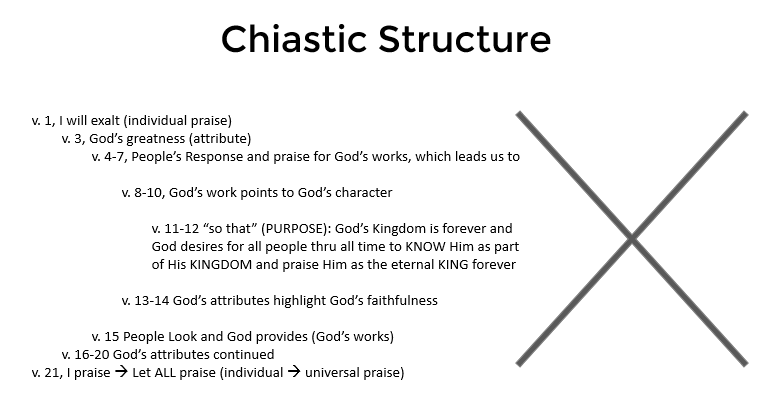
            Now, this song is structured in a way that points to the center; and the center of this song is verses 8-15. Now, we’re breaking this center section into two parts, which at first might seem a little odd, BUT I think it’s good to slow down and really dive deep into the center of this song because it holds a lot of rich theology. And the MAIN IDEA?  We don’t like to talk about this, but the main idea of this text is the WRATH of the LORD…and His SALVATION. God uses His wrath to save His people! God’s sovereign wrath is displayed over creation in v. 8-11, and then over the nations in v. 12-15; and the purpose of all of it? “in order to save His people.”

            I. First, God’s Salvation is Declared.

            I.A. Habakkuk starts this section with his final question, (again, starting with the LORD’s covenant name, as we’ve seen in each of his prayers thus far).

            v. 8, At what or whom is God’s wrath directed? Is it the rivers or seas? The small bodies of waters or the large ones? Because sometimes, it has seemed like it was!

            In last week’s lesson, we were drawn to thinking of the Exodus—being reminded of the plagues and pestilence that God used to draw His people out of Egypt. So, it’s natural to think of the Exodus again. Speaking of plagues, we remember the story of God turning the water of the Nile into blood, right? (Exodus 7)

            And, of course, we remember the crossing of the Red Sea. But in that story, the Egyptians were the ones riding on chariots, and what happened to them?  Exodus 15: “I will sing to the Lord, for he has triumphed gloriously; the horse and his rider he has thrown into the sea. 4 “Pharaoh’s chariots and his host he cast into the sea, and his chosen officers were sunk in the Red Sea.”

            Was God angry at the waters? NO, God used the Red Sea that He created to swallow up the enemy of His people! And Isaiah tells us, that God divided the waters and led His people in order to make for himself an everlasting and glorious name (Isaiah 63:12, 14).

            This wasn’t the only time the people walked across on dry land either! God did it again! In Joshua 3, the people walked across the river bottoms of the Jordan River into the Promised Land! And this time in flood season!

            Why did God do this? Yes, to remind them of the Red Sea, but ultimately, He says it was “how [they] [would] know that the living God [was] among [them] and that He without fail will drive out … the Canaanites” (Joshua 3:10). But it wasn’t just for Israel; God says it was “so that all the peoples of the earth may know that the hand of the Lord is mighty, that you may fear the Lord your God forever” (Joshua 4:24). The whole earth will fear the LORD! But He is our God forever!

            Habakkuk is recalling these mighty deeds of God to mind and putting them into song, and he’s doing that to help himself and the people to remember that God is sovereign over His creation. The sea was a symbol of judgment in the Bible—from beginning to end. What was Habakkuk experiencing?

            Well, the main god of the Babylonians was Marduk, the god of creation, water and storm. So, judgment using water was a direct hit on the Babylonians’ god (just like the plagues of Egypt were direct hits on their gods)!

            Next, we know that Babylon covered much of the Sinai (now, Arabian) peninsula, which is surrounded by the Red Sea, the Persian Gulf, and the Mediterranean Sea; and Ur was on the Euphrates River, running right through the middle of the peninsula. We saw lots of fishing imagery in chapter 1, so we know they valued their seaports because it brought them their luxurious lifestyles.

            At the end of Habakkuk, he mentions figs, vines, olives and fields perishing—so they may have already begun to experience droughts—the drying up of the rivers and the seas, as one of God’s means of calling His people back. (“yet you did not return to me,” Amos 4.)

            So, we’ve seen God’s mighty deeds in the past, we’ve discussed a little of what He might have been doing in Habakkuk’s day regarding the rivers and seas, but then, because we’re looking at a prophet, we have to consider that there may be future ramifications as well.

            The Past Exodus always points to the Future Exodus.

            Remember, prophecy is kind of like a mountain range. I think we’ve talked about the mountain range before—how when you see a mountain range from a distance, it kind of looks like one big range, but the closer you get, you can start to tell that it’s actually a bunch of mountain ranges stacked against each other. So, with prophecy, it can have a direct fulfilment at the time it’s given, but then it can be fulfilled repeatedly throughout history—especially when it comes to the cross and Christ’s return.

            So where do we see God using raging waters in the future? If you look at Revelation 8-10, Jesus opens the final seal, which brings woes upon those who refuse to repent—they include the sea turning to blood, darkness, plagues, a third of the earth’s population being destroyed, because they would not repent of their idolatry, violence, immorality, and theft. Sound like Babylon? (It even mentions the Euphrates River.) And as Jesus sets his right foot on the sea and his left foot on the land, he declares that when the final trumpet sounds, “the mystery of God would be fulfilled, just as he announced to his servants the prophets.” In Revelation 16-18, the same images are repeated for the same reasons, and he calls out Babylon specifically (which symbolizes all the evil nations by this point).

            SO, no, God isn’t angry at the rivers or the sea. But He is using them! Why is he pouring out this wrath?  

            I.B. God salvation is declared as He rides in wrath for salvation. What salvation? We have to look ahead to v. 13 – for the salvation of His people, and His anointed!

            Now we shift from the “horse and his rider being thrown into the sea” to a picture of God Himself on His chariots! It reminds me of one of my favorite songs, “O Worship the King,” verse 2 – “O tell of His might, O sing of His grace, whose robe is the light, whose canopy space. His chariots of wrath the deep thunderclouds form, And dark is His path on the wings of the storm.”

            I asked you to read a couple of psalms last week. Hopefully that was refreshing and helpful. Psalm 68: 17 The chariots of God are twice ten thousand,  thousands upon thousands; the Lord is among them; Sinai is now in the sanctuary.  20 Our God is a God of salvation,  and to God, the Lord, belong deliverances from death. 33 to him who rides in the heavens, …35 Awesome is God from his sanctuary; …—he is the one who gives power and strength to his people.                    

            Who is this awesome God of salvation?  Rev. 6:2 says, “And I looked, and behold, a white horse! And its rider had a bow, and a crown was given to him, and he came out conquering, and to conquer.”

            And then in Rev. 19: 11 Then I saw heaven opened, and behold, a white horse! The one sitting on it is called Faithful and True, and in righteousness he judges and makes war. … 13 He is clothed in a robe dipped in blood, and [His] name … is The Word of God. 14 … the armies of heaven, arrayed in fine linen, white and pure, were following him on white horses. 15 …[He comes]  to strike down the nations, and … rule them …. [Then it says,] “He will tread the winepress of the fury of the wrath of God the Almighty.  16…. [And his name is King of kings and Lord of lords.”

            Jesus Christ holds the reins of His Heavenly Horses, and He is riding in wrath to save us—to save you!—His beloved Bride—all those who repent and believe!

            TRANSITION: So, even though Habakkuk begins with a question, it’s more of a rhetorical one—he knows God’s wrath is right and good because when God shows His wrath to destroy the enemy, His intent is to save His people! Next, Habakkuk sees God’s Sovereign Splendor Displayed throughout creation! Let’s look at how creation responds to God’s chariot of salvation!

            II. First, God’s Sovereign Splendor is Displayed as

            II.A. God rightly judges over earth and heaven!

            He continues with this War Imagery:

            You stripped the sheath from your bow, calling for many arrows. Selah

            I’m a boy mom; I have 3 boys, ages almost 3 to 9, and they all love weapons! They are especially into bows and arrows. But this is no child’s play, so I did a little research on Avid-Archer.com. 😊 Avid-Archer explains, “In contemporary films, archery often symbolizes empowerment and liberation.” “In literature, archery often symbolizes the dual forces of love and war, [get this!] both of which require precision, focus, and an understanding of the target. [I thought that was cool.] Arrows can represent: [1] The piercing nature of love … [he mentions Cupid]… [and arrows can represent] [2] The destructive potential of war….” He goes on to say that “the bow often… symboliz[es] … power within waiting to be unleashed… As the arrow is released, it represents the triumph over one’s struggles—a climactic release of potential leading to victory.”

            And there is no greater power than the power of our God. In v. 9, we see God as our Coming Warrior King, riding on his chariot. The sheath of the bow was part of the quiver; the sheath is what you would carry your bow in to protect it; the quiver would also carry the arrows. For riders, the sheath would either be worn on their backs or actually mounted to the side of the chariot, for easy access. When he strips the sheath from the bow, He is grabbing out his war bow.

            This should remind you of the flood—when God hung his war bow in the sky—what we now call a rainbow! This rainbow symbol has been manipulated for evil and flown to celebrate the “Pride” of and for the LGBTQ+ community; they’ve even distorted into 6 colors instead of 7 (number of man vs. number of perfection); BUT, it will be redeemed by its Maker! And this bow will bring judgment, not in a worldwide flood (because God always keeps His promises), but in fire. And the rainbow will be seen again… Ezekiel saw it: … his first vision is of a storm and fire, a man seated on a throne, surrounded by a rainbow. And he realizes he has just been given a glimpse into heaven. He says, “Such was the appearance of the likeness of the glory of God. And when I saw it, I fell on my face and [listened]”(1:28). Then, in Rev. 4:2, John has a similar experience: “I was in the Spirit, and behold, a throne stood in heaven, with one seated on the throne… 3… and around the throne was a rainbow. … 5 From the throne came flashes of lightning and rumblings and peals of thunder,” and we see burning torches of fire and a sea of glass, all reflecting the glory of our Coming Warrior God!

            Gospel Connection: FOR those of us who are believers, instead of using this bow on us, God stripped Jesus of His life at the cross, pouring out judgment on Him in our place.

            The next line is really hard to interpret. ESV says “calling for many arrows.”

            • Other translations use various words for “Calling”, such as “ordering, swearing, oaths being sworn, even as thy word, etc.”
            • “Arrows” can be translated “rods, chastisement, spears,” etc.
            • “Many” can be translated as “7” – signifying fullness, completeness or the perfect number—exactly what God needs. Complete Jewish Bible: “order it (the bow) filled with arrows”

            So, it is a perfect execution of this covenant promise to not only show steadfast love (Exodus 34:6), but keep reading the rest of the covenant… verse 7 says, “who will by no means clear the guilty.” God’s love and God’s wrath are inextricably connected! He must accomplish both things—rescuing His people AND destroying His enemy. If this idea of wrath and love being connected is hard for you, you might picture a mama bear acting in wrath to protect her cubs from a mountain lion.

            The word “Selah” is a musical notation that most believe is like a “rest” or “pause” in order to reflect. So, the fact that Selah is here makes me lean toward the idea of the reminder of the covenant – we can reflect on God calling His perfect Word back to mind and using the Word of God, Jesus, to pierce the hearts of His enemies. For us, the Word pierced and divided our hearts to see truth and repent of our sin; for those who refuse to repent, the Word will pierce to destroy.

            No matter how you translate this, God is intent on loving His people, and He releases a cosmic war effort to retrieve us. In the end, the cosmic battle will be once and for all won when all God’s enemies are cast into the lake of fire, and God’s people and brought to dwell with Him as His forever bride in His forever kingdom.

            Psalm 7:11-13 says, “ 11 God is a righteous judge, and a God who feels [wrath] every day. 12 If a man does not repent, God will whet his sword; he has bent and readied his bow; 13 he has prepared for him his deadly weapons, making his arrows fiery shafts.”

            Isaiah 43: the LORD says, “Fear not, for I have redeemed you;
            I have called you by name, you are mine.
            2When you pass through the waters, I will be with you;
            and through the rivers, they shall not overwhelm you;
            when you walk through fire you shall not be burned,
            and the flame shall not consume you.
            3For I am the Lord your God,
            the Holy One of Israel, your Savior.”

            We love these verses, but I didn’t realize till I was studying for this that the context is God redeeming Israel from the hands of Babylon, v. 14, says “even the Chaldeans.”

            16Thus says the Lord, who makes a way in the sea, a path in the mighty waters,
            17who brings forth chariot and horse, army and warrior;
            they lie down, they cannot rise, they are extinguished, quenched like a wick:

            And chapters 44-45 are where Isaiah foretells of not only their exile but their return…

            [If you have time, spend some time soaking in Isaiah 40-50 this week; it’s so refreshing!]

            TRANSITION: Salvation is Declared; Victory is Sure; God rightly judges over earth and heaven! A second way we see God judging rightly is how he “split the earth with rivers.”

            We’ve already covered a lot on water imagery, and we’ve seen firsthand in the recent hurricanes how God literally redirects the flow of water; He unleashes the power of water to move mountains! Sides of mountains fell off their foundations last month. Towns and bridges were annihilated—washed away. Routes have been changed—not just in the roads but in where the rivers will run for years to come.

            Several commentaries, and our workbook this week, pointed us to the splitting of the Rock in the wilderness, providing water for the Israelites, which is a valid point. But God has been splitting the earth and dividing waters since the very beginning.

            Genesis 1:1, “In the beginning, God created the heavens and the earth. … And God … separated the waters [below] from the waters … above. … God called [this] Heaven. [Then] God said, “Let the waters under the heavens be gathered together … and let the dry land appear.” … 10 God called the dry land Earth, and the waters … he called Seas.”

            Gospel Connection: God is the Sovereign Judge of All Creation: He gets to decide where the land should split and the water run through. He Rightly Judges over Earth and Heaven. And He is Worthy of Worship.

            Application: By the way, God rightly judges our hearts too. Proverbs 21:2, “The king’s heart is a stream of water in the hand of the LORD; he turns it wherever he will.” He changes kings’ hearts, and he can and will change our hearts too. Have you experienced this? Do you need to experience this? Ask God to show you how your heart needs to change—towards Him? Towards your spouse? Your child? Your neighbor? Your coworker? Pray that God would turn your heart to be pleasing to Him. And then watch Him work.

            TRANSITION: Verses 10 and 11 switch from 2nd person (YOU) back to 3rd person, and we get to see how earth and heaven—all creation—responds to its Sovereign Judge. God came down, riding on his chariots of wrath, readying his bow and arrows, and

            II. B. The power of His presence is utterly intense and supremely glorious!

            The heavens and earth cannot handle it! How do they respond?

                  ” 10 The mountains saw you and writhed; the raging waters swept on; the deep gave forth its voice; it lifted its hands on high.”

            QUESTION: Have you ever “writhed” in pain? Childbirth and back pain come to mind for me. Can you imagine the mountains doing this? The mountains (think the Appalachians, the Rocky  Mountains, Mount Everest). Writhing. God is so supremely glorious that the mountains themselves writhe!

            We saw this in v. 6, “the eternal mountains were scattered; the everlasting hills sank low.” Now, “mountains” can also be symbolic for “nations”. So, both the literal, physical mountains, but also the symbolic nations, are writhing when God comes down. We see God as our Glorious and Sovereign Creator, but this time, He is leveling the landscape and beginning to make all things new, as He Recreates His Dwelling Place in the New Heaven and New Earth!

            The mountains saw the LORD and writhed…then what happened? More water imagery. The Deep sees God and gives up its voice, being rendered utterly speechless. Or… when the deep gives forth its voice, it’s crying out—lifting its voice and its hands in surrender to the Almighty! Water is symbolic of chaos. And just as God did in Genesis 1, God sovereignly brings order out of chaos again and again and again throughout history—and one day, there will be no more chaos! The LORD is on His throne, and the earth is silent, swept away.

            Psalm 77: “16 When the waters saw you, O God, …, they were afraid; indeed, the deep trembled. […once again, we have thunder and lightning and earthquakes… Then it says,] 19 Your way was through the sea, your path through the great waters;
                yet your footprints were unseen.

            Gospel Connection: Jesus walked through judgement for us. We cannot always see God working, but we must trust that He is. He will make our paths straight, and He will win in the end! But, in His love, God often uses His wrath in order to save His people!

            In Revelation 16-18, we see the fall of Babylon, once again accompanied by lightning, thunder, and earthquake. Rev. 16:19-20, “And God remembered Babylon the great, to make her drain the cup of the wine of the fury of his wrath. And every island fled away, and no mountains were to be found. In Rev. 17, God reveals a vision of mountains as actually the kings who “14make war on the Lamb, and the Lamb will conquer them, for he is Lord of lords and King of kings, and those with him are called and chosen and faithful.”

            TRANSITION: God rightly judges over earth and heaven, and God’s righteous presence is supremely glorious. The mountains and seas writhe. Next, the sun and moon stand still. Joshua 10:12-14 gives us the story of “when the Lord gave the Amorites over to …Israel,” through Joshua’s request. Joshua said, ““Sun, stand still at Gibeon, and moon, in the Valley of Aijalon.” 13 [and they did!], until the nation took vengeance on their enemies. 14…for the Lord fought for Israel.”

            Why did the sun and moon stand still? Was it a solar eclipse? No, Habakkuk says it was because of God’s speeding arrows of light and the flash of his glittering spear! They saw his glory in full display, as He came to take vengeance on His enemies once again. This is a supernatural eclipse, a revelation of God’s glory—the all-encompassing, incomprehensible sum of all of God’s attributes, shining forth in His presence.

            The sun and moon that God created were ordained to submit to their Sovereign Creator—as were we. One day, the sun and moon will stand still forever! In contrast to the city of Babylon being thrown down and her light being no more, we see in Rev. 21 “ a new heaven and a new earth, for the first heaven and the first earth had passed away, and the sea was no more. [no more judgment or chaos] … 23 And the city has no need of sun or moon to shine on it, for the glory of God gives it light, and its lamp is the Lamb…and there will be no night.”

            God, as the Glorious Sovereign, Eclipses us with His Glorious Splendor!

            Speaking of the Heavens, we looked at prophecy as being like a mountain range. A second image that might help is a constellation. When we look up in the sky and see the Big Dipper, for example, it looks like a cluster of stars, but the reality is that these stars are literally Light Years away from us and each other! The stars in the Big Dipper range from about 78 light years away to 128 light years away! Just ONE light year = 6 TRILLION MILES. So, if we even COULD travel at 600 mph, it would still take us 1 MILLION YEARS to travel ONE light year! This is the vastness of God’s creative and redemptive power! He uses one text, one image, to remind us of His past, present, and future eternal reign!

            Conclusion: I want to look at one final passage in Revelation 18. As Babylon is falling, you hear a voice, which I think is an echo of Habakkuk, along with Isaiah and Ezekiel, and the rest of the prophets—warnings to the nations—and to us.

            Rev. 18:4-5 says, “Then I heard another voice from heaven saying, ‘Come out of her, my people, lest you take part in her sins, lest you share in her plagues; for her sins are heaped high as heaven, and God has remembered her iniquities.”

            It’s a call to repent. Will you listen to His call? Are you one of the arrows? Jesus gave His life for you; are you willing to have your blood shed for Him? OR will you join Babylon and refuse to repent? Oh, I hope not. For the end of those who refuse to repent is to be pierced by His mighty arrows, fatally, for eternity.

            God’s “splendor” and wrath bring salvation and destruction. God displays His wrath through creation in order to save His people. So, can you rejoice in God’s wrath better now than yesterday? The wrath of God is a sobering topic. But as believers, we can rejoice that God will rescue us through His wrath. He did this by pouring out His wrath on Jesus instead of us. And He will do it again when He comes to bring us finally Home.

            I got a glimpse of this as a summer camp counselor during my college years. We were on a hike at the 4th falls at the Wilds (which is a pretty intense hike), but an unexpected summer thunderstorm came out of nowhere. Thunder, lightning, even limbs dropping onto the trail. We tried to find hollowed out places on the side of the trail to shelter until it passed. And someone began to sing this song. “I Sing the Mighty Power of God.”

            So I want us to sing this together today. When I taught this to our preschoolers, we added a little bridge that can be sung at the beginning and end of the song. It’s really simple, and it’s become one of my sons’ favorite bedtime songs. It goes like this.

            Teach Bridge:  “There’s no greater power than the power of our God.” X2 (LifetreeKids)

            So we’ll sing the Bridge, all 3 stanzas, and close with the bridge. Let’s sing of the Glorious Splendor of our  Sovereign King, who will come in Victory—may it be soon!

            I Sing the Mighty Power of God (Isaac Watts, 1715)

            1. I sing the mighty pow’r of God, that made the mountains rise,
              That spread the flowing seas abroad, and built the lofty skies.
              I sing the wisdom that ordained the sun to rule the day;
              The moon shines full at His command, and all the stars obey.
            2. I sing the goodness of the Lord, who filled the earth with food,
              Who formed the creatures through the Word, and then pronounced them good.
              Lord, how Thy wonders are displayed, where’er I turn my eye,
              If I survey the ground I tread, or gaze upon the sky.
            3. There’s not a plant or flow’r below, but makes Thy glories known,
              And clouds arise, and tempests blow, by order from Thy throne;
              While all that borrows life from Thee is ever in Thy care;
              And everywhere that we can be, Thou, God, art present there.

            Habakkuk 1:12-2:1, My View from the Watchtower

            Before we get into our main lesson today, I want to take our first few minutes to look at a couple of study tools as we come to God’s Word.

            First, let’s talk Context.

            Context helps us get a fuller understanding of what’s being said. This might mean we study what’s going on during this time period. But it also includes literary context, which is the passage before and after your text. Habakkuk is such a short book that it can actually really help us to read the whole text each week…maybe even several times. If you have a Bible app, consider listening to it while you’re running errands or washing dishes. Soak in the text. The more you read it, the more connections you are likely to see.

            How did the book start? With a prayer… Habakkuk receives this heavy burden from the LORD and rightly brings this burden back to the LORD. Habakkuk sees and questions, “God, do you see what I see?!”

            Then, God assures him that He’s seeing it all and tells Habakkuk to look and watch because He’s about to do something that is unbelievable!

            Now it’s Habakkuk’s turn to talk. And, just as we saw in that first passage, in today’s text, we’ll see Habakkuk continuing to carry this burden back to the Lord for as long as it takes to see God bring about justice.

            What comes next? God answers again. The wicked will receive woes, and God will get the glory. And then the last chapter is a song of remembrance of God’s past deliverance and Habakkuk’s determination to sing praise to God no matter what. So that helps us remember in our text today that God will answer His people’s prayers. And God will execute perfect justice. And it helps our theme of waiting and watching for God to work to become a strong emphasis.

            The next tool in our toolbox is Parallelism.

            Did anyone find it hard to figure out who was who in this passage? We have to remember that we’re looking at Hebrew poetry. And Hebrew poetry is not about rhyming like our standard English poems. It’s not even about cadence or number of syllables. It’s more about parallel ideas that either compare and contrast or repeat and elaborate upon each other. So, let’s look at Habakkuk 1:12-13 in the ESV and NIV for just a minute to see if we can learn anything new by using this tool.

            I tend to go with the oldest date (if we know that), and the fact that the oldest manuscripts also reflect Hebrew parallelism seems to confirm this interpretation.

            Lines 3 and 4 (v. 13) follow the same pattern of parallelism as Lines 1 and 2 (v. 12).  Another reason I don’t think Habakkuk is assuming he won’t die or can’t die.

            Let’s say you’re not convinced. Is it okay to translate this we? Even if Habakkuk IS saying “We will not die,” He’s still basing this belief on the covenant nature of God that we’ll talk about in a minute. I don’t think he’s saying that he will never die physically, because he knows death has been a part of humanity since the curse; it’s appointed to every man and woman to die once. And he’s seen what happens when evil nations bring other nations into exile. People do die. But it may be that he’s confident that even unto death, he will live with God forever because our souls never die.

            “My View from the Watch Tower”

            Have you ever been in the middle of a really hard conversation and the phone cuts out? Maybe it’s an argument with your husband or a friend. Maybe you’ve been waiting all week for a response to a job interview—did you get it or not? I have two examples that come to mind… the first was when my twin sister was having her third child. So, we knew she was going into labor, we’re excited that this baby is coming, and then about 12 hours in, we get the dreaded phone call: ” Baby’s in distress, we’re going in for emergency c-section! [Click.]” And there’s nothing you can do. So, you pray and you wait and you watch the phone because you know that they’ll call you back as soon as they can, but there’s just not an answer. Then we got a second phone call: “The baby’s okay. [Silence.]” “And Michelle?” “We don’t know yet. [Click.]” And we wait again. And you don’t know if the answer will be positive or not. The other example was my brother this January, my dad called me and said, “I’m taking Jordan to the ER because we think he had a stroke.” And he did. And it was pretty serious. And I remember giving Callan a bath that night and just kneeling by the tub, crying out to God, “God, it hasn’t even been 6 months since mom died… please don’t take my brother too!” And you fast and pray and wait. And wait.

            And that’s the kind of feeling we drop into with Habakkuk. He is reeling with a pit in his stomach and holding his breath, and he cries out to God. (And, yes, we praise God that both my siblings are alive and well today, and God used those things in their lives to grow their faith in the LORD, just as He did with Habakkuk.)

            The poetry of this section is more of a personal lament than a complaint. We see the personal nature as he refers to God as “my God” and “my Holy One.” Then, there’s the typical lament pattern: there’s a statement of faith, followed by an extended question, then another statement of faith (A-B-A). He also seems to be elaborating on his first lament in verses 2-4, even using many of the same words.

            Don’t we do this? We pray a quick prayer and then the answer seems to be confusing, so we pray in a longer way? What attitude do we do this with? Is Habakkuk questioning God in a disapproving manner? I’d argue that Habakkuk comes to God in an attitude of confidence in God’s character and promises. And we can follow this pattern as we bring our laments to the Lord too.

            Habakkuk begins by taking a hard look at the character of God. So, let’s do that with Habakkuk.

            I. First and foremost, we need “A Right View of the Rock of the Ages.” (1:12-14)

            When God gives us heavy burdens, it is absolutely necessary that we are grounded in who God is. We cannot look at our circumstances and change our view of God. Rather, we look at our God, and let what we know to be true about Him give us perspective about what we’re going through. In fact, isn’t usually the hardest circumstances that actually help us get a bigger view of God and understand Him even better? This is God’s heart throughout Scripture—isn’t it?! To give us a big view of Himself. And He doesn’t change—so this is God’s heart for you and me too—to know us and to make Himself known to us in a big, personal way. Relationship, not just religion. So, what does Habakkuk know about His God?

            1. He knows God is a personal, covenant keeping God (v. 12)
            2. He knows God is eternal (v. 12)
            3. He knows God is all-powerful and good (v. 12)

            Let’s look at each of these attributes for a bit. First, God is a personal, covenant keeping God.

            One of the first covenants we have is the covenant between the LORD and Abram (Abraham). In Genesis 12, God called Abram out of his home country (Ur of the Chaldeas—ironically, the same people group that are attacking his descendants now) and God promised to make Abram a great nation and through him bless all the families of the earth. Fast forward over two decades, and Abram is still waiting for a single son, let alone a great nation! And this is where the covenant comes in. In Genesis 15, The LORD promises again to give Abram a son and make his offspring as numerous as the stars in heaven! “And he [Abram] believed the LORD, and he counted it to him as righteousness” (15:6).

            Then God did something as a sign of the covenant He was making with Abram. He had Abram bring a bunch of animals and cut them in half and lay them out. Then Abram fell into a deep sleep, and the LORD said to him, “Know for certain” that I will do what I said I would do (15:13). Then Abram saw “a smoking fire pot and a flaming torch passed between these pieces” (15:17). This was a special ceremony—the smoke and fire were symbolic of the LORD Himself, and the cutting in half of the animals was saying in essence, “If I, the LORD, do not keep my end of the covenant, may I be cut in two just like these animals.” But we know that God always keeps His promises! God Himself cannot die! He is eternal! And He’s serious about keeping His word forever!

            Habakkuk is grounding his prayers in his relationship with God. In fact, every prayer of Habakkuk begins with the word LORD in all caps (see 1:2; 2:12; 3:2). This is God’s covenant name, YHWH, revealed to Adam, Noah, Abraham, Moses, and David. All of our relationships with God are grounded in this covenant history—in this covenant name—and Habakkuk highlights this first.

            TRANSITION. The phrase “from everlasting” can point to both God’s eternality, but even more frequently, it implies a specific act of deliverance in Israel’s history. So once again, it points us to the covenant keeping nature of God—the Rock of ages—”our help in ages past,” “our hope for years to come.”

            The covenants of God are really important to understand as we look at OT prophecy. We don’t have time to dive into all of it, but I would recommend two books: 1. Christ from Beginning to End by Stephen Wellum and our pastor Trent Hunter, which points to Jesus in every book of the Bible! It’s fantastic if you’ve never seen that before; and 2. Covenants Made Simple by Jonty Rhodes, which is an easy-to-understand introduction to the covenants (this is a really excellent read and very helpful).

            TRANSITION: So, Habakkuk knows God is a personal, covenant keeping God. Next, Habakkuk knows that God is eternal—completely sovereign from eternity past thru eternity future. He has no beginning and no end. And His eternality is part of what makes Him supreme. We cannot comprehend this, but we must have this faith, as Habakkuk did and base our laments on it.

            God is unchanging. I love that Habakkuk calls God “my Rock.” Is God your Rock today? If not, He can be…when we fix our eyes on Him.

            Deuteronomy 31 is the passing of the torch from Moses to Joshua. Moses is 120 years old and about to die. He reads the Law to the people and he writes it all down (which we know as the Pentateuch, or first five books of the OT), then God tells Moses, “I will surely hide My face in that day because of all the evil that they have done, because they have turned to other gods” (31:18). Then God commands Moses to write a song and sing it to the people. And we find that song, the Song of Moses in Deuteronomy 32. Let’s read v.3-4, and then if you haven’t done this yet, I’d make a little note to read through all of Deut. 32 and see what similarities you see and how often God is referred to as The Rock.

            “3 For I will proclaim the name of the Lord;
                ascribe greatness to our God!

            “The Rock, his work is perfect,
                for all his ways are justice.
            A God of faithfulness and without iniquity,
                just and upright is he.

            The song goes on to talk of God leading the people to the Promised Land, but how they grew discontent and “forsook [the] God who made [them]; [they] scoffed at the Rock of [their] salvation. 16 They stirred him to jealousy with strange gods [idols]; …  18  were unmindful of the Rock that bore you, and you forgot the God who gave you birth.”  And it goes on about their idolatry against their Rock.

            I read this to remind us that what Habakkuk is seeing is not new. This is not the first time Israel rebelled. In fact, it’s somewhat of a broken record by this point. Verse 13 reflects Habakkuk’s wrestling with what He believes to be true about God with His circumstances.

            TRANSITION: Habakkuk knows the Scriptures, and more importantly, He knows God. A. He knows God is a personal, covenant keeping God; B. He knows God is eternal; and C. He knows God is all-powerful and good. God will execute perfect, right justice.

            Let’s read verse 13: “You who are of purer eyes than to see evil and cannot look at wrong, why do You idly look at traitors and remain silent when the wicked swallows up the man more righteous than he?”

            Habakkuk knows God is pure and will not tolerate evil, because that’s part of His covenant promises, and yet the reality of Habakkuk’s surroundings and his theological belief do not seem to line up for him. He’s like, “I see all this evil all around me. How is God letting this go unnoticed? He sees everything, right? He’s all knowing, right? All powerful? I just don’t get it, God!”

            We’ve all been there—or if we haven’t, we will be at some point. I get Habakkuk’s paradox here! I know I’m only in my 40s, but the older I get, the more wickedness and brokenness and frailty I see in this world. And no matter how hard we try to guard ourselves from it, it’s simply unavoidable. We live in a fallen world, and we know that man apart from God is NOT essentially good—but rather, deceitful and desperately wicked. We are messed up! We need Jesus!

            When Habakkuk says that God has “purer eyes than to see evil,” does he mean that God is not omniscient? No. God sees all and knows all, and yet He cannot and does not dwell on the evil. Fast forward hundreds of years to Jesus on the cross—what did God do? He looked away from His Son. Jesus was forsaken for us—because Jesus took all of our sin upon Himself.

            So, we, like Habakkuk, have a choice—we can either let ourselves become overwhelmed by our circumstances and the wickedness of this world, and the wickedness of our own hearts and get depressed and doubt and even turn from God, like so many of the Israelites did! We can reject God and His covenant promise, and pursue idols and all forms of evil to fill up our own desires and pleasures, to try to fill the void and distract ourselves from our fears, OR we can run to God in prayer and faith and trust that God is doing something bigger and deeper and more eternally significant than we are able to see, even through these hard and horrible things. He is 100% sovereign over every aspect of His creation. And He is good!

            We don’t get to decide what “good” means. We want to think that “good” is subjective to what we like or want, but God defined goodness in Himself! Whatever He does is good, and we must align our hearts with His sovereign goodness.

            We will go through hard things, but hard is not the same as bad. When we go through hard things, we must remember that it is absolutely God who caused it! Is that hard to think about? To wrap our minds around? Sure. But v. 12 says that the LORD  “appointed” and “ordained” the Chaldeans for a purpose—“to execute judgment” and “to punish”—and the judgment and punishment was on the people of God in order to lovingly draw them back to God! The word “punish” here has the idea of doing what is right or just to correct AND to redeem!

            Now we come to v.14: “You make mankind like the fish of the sea, like crawling things that have no ruler.” “You” refers back to the LORD! God is the one removing their kings and scattering them into foreign nations! We see this language throughout the prophets, God causing affliction through armies—of men or of locusts, through weather, drought, famine, and then saying, “Yet you did not return to me!” In Romans 1, it is God who gives those who refuse to repent over to the lusts of their hearts and a debased mind.

            God gives His people so many warnings, including this one in Deuteronomy 29:

            “18 Beware lest there be among you a man or woman or clan or tribe whose heart is turning away today from the Lord our God to go and serve the gods of those nations. Beware lest there be among you a root bearing poisonous and bitter fruit, 19 one who, when he hears the words of this sworn covenant, blesses himself in his heart, saying, ‘I shall be safe, though I walk in the stubbornness of my heart.’ This will lead to the sweeping away of moist and dry alike.”

            We as a nation are consumed with the idea of safety—physical, emotional, all of it. But we’re also consumed with stubbornly holding to what I want to believe is true—whether it is or not—and attempting to silence anyone who dares disagree with me. We are not so far off from the wickedness of the Israelites, are we? The result of this stubbornness: the LORD overthrew them because they abandoned the covenant, uprooted them, and cast them out…and ultimately, blotted out their names from under heaven! This is serious! Do we think we can walk in our sin and still inherit the kingdom?!

            If you are walking around saying, “I’m okay,” but your heart is stubbornly set against God and His Word,   I beg you to repent of your sin and walk humbly with God! If you refuse to repent, you will find yourself among the religious crowd in Matthew 7 crying, “Lord, Lord, did we not prophesy in your name, and cast out demons in your name, and do many mighty works in your name?’ And then Jesus answers, “I never knew you; depart from me, you workers of lawlessness.’” Salvation was never about our works! Apart from God, there is ZERO goodness in any of us!

            Habakkuk was pleading with God because he saw God as being silent when the wicked were swallowing up Israel—he called Judah “the man more righteous than they” (referring to the Babylonians). But are they? Was Judah “more righteous” than Babylon? No! The Northern Kingdom had already been sent into exile, and now Judah was following in her footsteps! Judah had sinned every bit as wickedly as Israel AND Babylon. Why? Because they rejected God, which made them traitors and enemies of God!

            This is a distorted thought of comparison: “we’re more righteous than they are!” But no, God tells us it’s foolish to compare ourselves among ourselves. Rather, we must compare ourselves to God—and when we do that, He corrects our thinking by humbling us and drawing us to repentance and righteous living.

            Romans 3 (v. 9-12, 23) tells us that we are all sinners! The Jews aren’t any better off, and neither are we as Gentiles! There is none righteous, no, not one! God sent the Law and the Prophets, and then He sent Jesus—the righteousness of God manifested to us—to rescue and redeem us from our sin! We are not more righteous than anyone, except through faith in Jesus, the truly Righteous One, who loved us and gave Himself for us, taking our sin, and giving us His righteousness in its place.

            If you study through the prophets, you will see this theme over and over and over… God’s heart is always FOR His people. He loves us desperately! And will do whatever it takes to bring us to Himself. And that doesn’t always make sense to us as humans. But God’s ways are better than our ways. He does everything for His glory and our good, because He knows what our best good is…to dwell with God Almighty for all eternity! That is good! Because God is good! And we can be confident that God will always keep His covenant promises to preserve His children and destroy His enemies.

            Which brings us to our next point regarding God’s (and Habakkuk’s) enemies…

            II. A View of the Wicked Netsmen (1:15-17)

            We switch from “You” (referring to God) to “he” (referring to the Chaldeans). v. 15 – “He [Babylon] brings all of them [Judah] up with a hook; he drags them out with his net; he gathers them in his dragnet; so he rejoices and is glad.”

              Habakkuk keeps with his fish imagery here and sees the enemy capturing God’s people with hooks and nets—symbols of aggression, but also symbols of divine judgment in their day. And the evil nations were known to use hooks literally to drag their hostages away, treating them like hunted prey rather than human beings. The word used for “net” here in the original language is a wordplay, and in Deut. 7:26 it’s translated “devoted to destruction.” This is seriously awful!

              And then we see this phrase, “he rejoices and is glad.” Do we see this anywhere else in Scripture? Yes! The joining of these two words is throughout Scripture as a call to worship! “Rejoice and be glad!” But here it’s used of the wicked rejoicing in their conquests, not worshiping God! (v.11, “their god is their own might.”)

              v. 16 continues their false worship ceremony: “Therefore he sacrifices to his net and makes offerings [or burns incense] to his dragnet.” This is a very public form of idolatry!

              Why? “For by them he lives in luxury, and his food is rich.” The evil seem to be prospering here! They are very affluent, and they follow a very logical, and yet very wrong, line of thinking. They think, “Well, sure I’m cruel, but it must be okay because it’s making me rich, and if I’m fat and happy, then that’s a sign of the gods’ favor, right?!” “The end justifies the means.” But no, just because someone is rich and powerful in this world, it does not mean that’s because “the gods” or God Himself is blessing him!

              Habakkuk felt this… and he asks God directly (v.17), “Is he then to keep on emptying his net and mercilessly killing nations forever?”, echoing the “O LORD, how long?” cry from his first lament (1:2). (Spoiler alert: Will the Babylonians keep doing this forever? No, the woes are coming in the very next chapter! And we’ll look more later at the end of Babylon in a future week.) 😉

              Asaph felt this in Psalm 73… he was so weary because he saw the wicked seemingly prosper and always at ease, increasing in riches. And he wonders, is being pure before the Lord and worshiping God worth it?! Then, he goes into the sanctuary of God and God revealed their end. They will be utterly swept away, but God’s beloved children will be received to glory, to be with God forever!

              We must remember that our sin is every bit as snaring as the enemy’s nets, but Jesus sets our hearts free to wait and to worship. We need to follow Asaph into the sanctuary of God and follow Habakkuk to the top of the watch tower… and look at Habakkuk 2:1 for a minute.

              III. Right Responses from the Watch Tower (2:1)

              We can’t look at verses 1:12-17 without finishing Habakkuk’s thought with 2:1, so let’s read that now, noticing the very personal language Habakkuk uses.

              “I will take my stand at my watchpost and station myself on the tower, and look out to see what He will say to me, and what I will answer concerning my complaint.”

              Notice he doesn’t say “we”—he is in a lonely, isolated situation, with a heavy weight, or burden to bear, but he takes individual, personal resolve to take up the task that God has set before him. He uses words like “I” and “my” 7x in this short statement.

              Habakkuk began his lament with a personal relationship with God and now he ends his lament with a personal resolve to wait for God’s answer in God’s time.

              Hosea 9:8 tells us one of the main purposes of a prophet: “The prophet, along with my God, is the watchman over Ephraim, [“the people of my God”].”(NIV) The watch post position was one of not only looking for the enemy attacks, but also sounding the alarm to the people! This is the job of a prophet—to watch and to warn! And this is what Habakkuk is resolved to do! He loves God and He loves the people of God, so no matter how hard it gets, he’s going to wait for God’s answer and continue to warn the people to turn back to their God.

              We are not prophets, especially in the OT prophet sense of the word. But the crux of the word prophet is a proclaimer. And that we can do! We have this picture of a watch tower—this would be a position on the wall of a fortified city. In Habakkuk’s case, this would have been the watch tower built into the city wall of Jerusalem (before the wall was destroyed and the people taken into exile).

              For us, as women, we are to be keepers of the home—this has that same watch tower / gate keeper imagery. We fix our eyes on Jesus and set the tone for what comes in and out of our four walls. We are called to proclaim truth to one another—particularly to our own children and to women younger than us (as in Titus 2).

              Waiting takes time. We need this message more than ever! We must slow down and be still. We must resolve to look for God in every aspect of life and be ready and willing to warn those in our sphere of influence that Jesus is coming. This definitely includes home, but it might also include other spheres—whether it’s a leadership position at church or outside the home with a job or in your community. Each of us has been positioned by God in a personal watch tower of sorts. And we can and must proclaim God’s truth in these watchtowers God has placed us in. But how do we do this?

              Waiting requires perseverance, humility, and patience in quietness. When we see God for who He is, He gives us the gift of repentance to turn from sin to following our Savior. He gives us faith and other gifts to call others to join us in a life of repentance and faith, keeping our eyes fixed on Jesus! Say with the psalmist, “I lift up my eyes to the hills. From where does my help come? My help comes from the LORD, who made Heaven and earth” (Psalm 121:1-2).

              These last five years have had a lot of laments for our family. We’ve had hard diagnoses, death, difficulty in relationships; I quit a job I loved because it was the right thing to do for our family. Life is full of hard things and various disappointments. Sometimes it seems like life is shadowed by a little black raincloud. BUT GOD! Through every single thing, we have seen God proving Himself over and over and over to be faithful to His covenant, and faithful to us as His covenant children. We have seen God strip away our expectations and lift our eyes to a greater understanding of His goodness and glory. And in those lonely, dark hours, we must follow Habakkuk’s example once again. Fixing our eyes on our coming King Jesus!

              So, when you are hit by a wave of emotion—grief, anger, fear, confusion, doubt—for whatever circumstance God has placed you in, remember God is with you! The God of Habakkuk is our God too! And we can follow Habakkuk’s example—confidently taking our laments to the Rock of Ages, and then confidently fixing our eyes on the God who will answer and rescue.

              Meanwhile, we wait patiently; we wait humbly; and we wait expectantly. So, take your stand and look to see what God will say! God will answer, and God will win! But you’ll have to keep reading for that part.

              Let’s pray. “O LORD, You are our Holy One, our God, our Rock—and we do not always understand Your ways, but we trust Your character. You are our stability and eternal hope. And we thank You for the hard realities that drive us to Your goodness. Keep our eyes fixed on Jesus who “endured” much more “hostility” than we ever have, and yet did so with “joy, so we may not grow weary or fainthearted.” Thank you for the “discipline” you use “for our good, that we may share in Your holiness,” by the mercy of our Savior Jesus Christ, in whose name we pray, Amen.”

              Ezra 1-2: The Stirring of the Spirit

              Before we dive into the book of Ezra, we need to make a few comments about the timeline of the book. In our English Bibles, it’s found right after Chronicles, in the historical or “writings” section and well before Psalms and the prophets. In fact, if you read the last few verses of 2 Chronicles and the first few verses of Ezra, much of it is identical! But chronologically, while it falls after the Chronicles, Ezra-Nehemiah was originally one book and falls at the end of the Old Testament. (Ezra may have actually been the author of Chronicles, Ezra, and Nehemiah.) Prophets that correspond with Ezra-Nehemiah are Haggai and Zechariah, as mentioned in Ezra 5. Esther and Daniel also fall in this time period, as the kings mentioned overlap, so you may want to skim those books to refresh your memory of the time period.

              As for context, remember that Israel had disobeyed God and had been warned by God (repeatedly) that the punishment would be 70 years of exile if they didn’t repent (see Daniel 9:1-2; Jeremiah 25:11-12; 29:10). As prophesied, Israel was taken into exile by King Nebuchadnezzar (Babylonian empire), then Babylon was conquered by the Medes and Persians. In Isaiah 44:28-45:3, years before the exile, God prophesied through Isaiah that He would go before His people, providing and preparing their path, and calling them by name to return; and He specifically names King Cyrus as the “anointed” one He would use to “shepherd” His people back to Jerusalem! (Cyrus probably wasn’t even born when Isaiah wrote that, and he definitely wasn’t king yet!) Ezra 1 opens with the first year of King Cyrus’ reign in Persia (ca. 538-539 BC) and Nehemiah closes around 433 BC (just before the 400 years of silence between the Old and New Testaments).

              Some key themes in these first two chapters are as follows:

              • God’s Word (God always keeps His Word! Even the king’s proclamation that was proclaimed and written down in official records became part of God’s Word… and the fact that God moved in Cyrus to record his proclamation will be significant later on in the story when a future king looks it up and helps God’s people finish their work!)
              • God’s House (God’s desire has and always will be to dwell with His people! Even the temple articles that had been taken by Nebuchadnezzar were returned, which would be used to restore God’s Place of Worship.)
              • God’s Spirit stirring hearts of men (believing Jews as well as a pagan king) to accomplish His plan of Redemption, Return, and Restoration! (The King of Heaven’s Plans, Power, Presence and Provision are all very evident in these first two chapters!)
              • Two more themes we’ll see later in the book are Repentance and Rebuilding.

              A few more questions to ask as you study:

              • What other themes of repeated words do you see in these first two chapters?
              • What attributes of God do you see in these chapters?
              • How does the list of returnees in chapter 2 fulfill Isaiah’s prophecy in Isaiah 45:3?
              • What parallels can you think of between the Remnant’s return from exile and the exodus out of Egypt? (Note: You may want to compare and contrast details about the tabernacle and temple; feasts and other celebrations; the Law given to Moses and taught by Ezra; etc. throughout the study as time allows.)
              • How do some of the returnees point us to Christ’s work as Prophet, Priest, and King?
              • How is the Spirit stirring in your heart today?
                • Is there anything you need to repent of and return to the Lord?
                • What “freewill offerings” are you able to give to His Kingdom purposes?
              • Do you believe God’s Word is true and God always keeps His promises?
                • How can you grow in confidence of God and His Word this week?
                • How can you grow in adoration of God and His Word this week?

              Conclusion: God was so incredibly gracious to work in individual hearts through the stirring of the Spirit to return to the promised land, contribute to His Kingdom plans, and help rebuild His temple so His people can dwell with Him. And this same God is so incredibly gracious to send us His Spirit to work in our hearts to redeem us through His Son’s work on the cross and to restore us to Himself so we can dwell with Him together forever!

              Next up: Ezra 3-4. If you’re studying along with these posts, take time to pray and ask God for wisdom, understanding, and insight; reread all of Ezra; then read the specific chapters a few times, looking for key words, ideas, connections to Jesus; write down any questions you have & see how God will use His Spirit to help you understand His Word and apply it to your life today. There’s no timeline to this, so take it a step at a time; slow down and soak in the Word.

              The Good Hand of Our God

              This summer, I’m studying through the books of Ezra and Nehemiah with a few friends from church.

              I’ve been wanting to study Nehemiah for a while now (it kept popping up as a cross reference in various other studies I’ve done). So, when I found out we’d be studying the book of Esther in the fall with our Ladies Bible Study at church, I knew it was the right time (since they take place around the same time). As I started into my preliminary study of Nehemiah, I quickly realized that Ezra and Nehemiah were originally one book! So, we jumped back to Ezra and started there. We’re also doing a brief look at Haggai and Zechariah to give context to the prophetic voices of that day, since they’re mentioned in Ezra 5:1.

              Besides my NIV Study Bible, I also picked up a couple of ESV Scripture Journals for Ezra and Nehemiah, a copy of Sarah Ivill’s Ezra-Nehemiah Bible Study: The Good Hand of Our God Is Upon Us (which has been incredible so far!), and The Bible Speaks Today commentaries on Ezra and Haggai, Nehemiah, and Zechariah (I found all of them used on Amazon for around $4-7 each). And I listened to the Help Me Teach the Bible podcast episodes on Ezra and Nehemiah, which were very helpful.

              I’ll come back and fill in some notes from each of the chapters in later posts, but I wanted to get an initial post out there as I launch this new blog. If you’re interested in this study, feel free to start by reading through the books in your favorite version of the Bible, and check out Sarah Ivill’s Bible study book or any of the other resources mentioned above. There’s no timeline or pace, but if I had to make a recommendation, I’d say studying two chapters at a time for one or two weeks a piece works out well for our small group. And it’s totally informal–just four ladies meeting every other Saturday morning for a couple hours and sharing what God is teaching us, and maybe texting a few times in between to ask questions or encourage one another.

              The two phrases that have stood out the most (by far) are “the good hand of our God” and “steadfast love” (referring to the steadfast love of the LORD–the name God uses to remind His people of His covenant with them). I’ve been blown away by God’s sovereignty, provision, and care for His people through these books! The people of God have been in exile for 70 years, and God is calling them back to Himself and Jerusalem to rebuild and renew their relationship. Despite exile and countless setbacks and severe trials, God continues to keep His eye and hand on His people, guiding and providing in the most amazing ways–even by directing the hearts of pagan kings to make decrees and offer funding from the royal treasuries to provide for the rebuilding of the temple and the ongoing sacrifices to the God of Heaven. It’s a beautiful story!

              If you haven’t read these books in a while, go ahead and dive in. What key phrases stood out to you as you read?

              A Working Structure of James

              James: Bind My Wandering Heart to Thee

              1. Philosophy and Intro (James 1:1): “God, Our Steadfast Father, Calls and Equips His Children to Live Humble, Faithful Lives through His Perfect Wisdom and the Power of His Word.”
              2. Our Good Father: The Nature of God (1:2-19)
                • Life of Trials: Reality, Responses, Results
                • God’s Gifts: Faith, Wisdom, Life, Word
                • Father of Lights: Adopts to Bless
              3. Reflections of a Father: Adoption (1:19-27)
                • The Living Word
                • A Good Look in the Mirror: The Perfect Law
                • The Lived-out Word
                  • The Bridled Tongue
                  • Care for Vulnerable
                  • Pure Life
              4. Favor vs. Favoritism: Election (2:1-13)
                • The Sin of Favoritism
                • The Savior’s Impartial Favor
                • What’s Showing? Mercy over Judgment
              5. Can Faith Save? Justification (2:14-26)
                • A Few Gospel Principles: Judgment, Faith, Justification
                • A Practical Grid of Faith
                • Anatomy of Faith
              6. Of Wisdom and Words: Sanctification (3:1-18)
                • The Power of Words
                • The Proof of Wisdom: Works
              7. On Fighting and Friendship: Repentance, as part of Sanctification (4:1-12)
                • Rebellion
                • Repentance
                • Reminders concerning the Law and Judgment
              8. On Timelines and Treasures: Providence (4:13-5:6)
                • Timelines: Man’s Proud Plans vs. God’s Perfect Providence
                • Treasures: Man’s Greed vs. God’s Rich Provision
              9. Blessed are the Steadfast: Perseverance (5:7-20)
                • Hope in the Lord’s Return: Patient in Suffering
                • Faith in Action: Speak Truth and Pray Always
                • Love for Weak and Wandering: Restoration

              Song: Come, Thou Fount

              Psalm 145: A Song of Praise to the King

              Key: When we see Jesus as our King, the natural next step is to burst forth in praise!

              1. God’s Greatness, vv. 1-7
                • We Have a Great God!
                • God is worthy of Great Praise
              2. God’s Kingdom, vv. 8-14
                • The Character of the King, vv. 8-9
                • The Characteristics of His Kingdom, vv. 10-14
              3. God’s People, vv. 15-21
                • God Cares for His People, vv. 15-20
                • God’s People Respond with Prayer and Praise, vv. 18-21

              Dear God, Thank you for Psalm 145. And thank you for this book of Psalms. Thank you for these ladies who are listening and learning to love the Psalms with us. Would you teach us to praise Your name today… give us Your wisdom and cause us to fear you and to love you and to praise you. We pray these things in Jesus’ name, Amen.

              Psalm 145 has got to be one of the greatest psalms of praise in the whole book! We often think of Psalms as a book of praises, but today’s psalm is actually the only one with the word “Praise” in its superscript title! Last time I was up here, we were talking about the darkest psalm in the Psalter…and today we’re on the exact opposite end of the spectrum, with one of the brightest psalms!

              2020 has been quite the year. We’ve lived through (or maybe I should say we’re living through) a pandemic and protests [fires in California; hurricanes, tornadoes, Sahara dust–anyone else start counting to see if we were going to get to 10 plagues this year?! I wish I was joking]. And we’ve had enough politics to last a lifetime–or at least another four years. Tonight we find out who our next president is, but today, we get to focus on Psalm 145 and praising the King of Kings! And tomorrow, when we wake up with whatever results in our nation, we still get to praise the King of Kings!

              In my opinion, Psalm 145 is one of the most beautifully complex pieces of poetry in the whole book of Psalms. And in some ways, rightly so. All that’s left is the closing five psalms, which are thought of as a set; Psalms 146-150 are one continuous doxological praise reflecting the same scheme as 145, starting with I will extol and ending with all flesh/breath praising the Lord; they move from individual praise to universal.

              Intro / Structure

              A few years ago, we got invited to an absolutely gorgeous wedding of some dear friends! It was the most beautiful, elaborate, glamorous event I will probably ever get invited to. And every detail was thoughtfully put together and perfectly executed. It took place in this beautiful old stone church in Laurens and then we went back to the family estate where a gigantic tent was setup in the lawn with live music, a full sit down dinner, fresh flowers and lights everywhere, and the most gorgeous cake I’ve ever laid eyes on. Have you ever been to a party like that?! Well, I know this analogy will crumble at some point, but Psalm 145 is like a stunning, tiered wedding cake. It has layers upon layers of structure…it’s sweet and specially crafted for the most glorious party you’ll ever go to!

              1. The first layer is a classic vanilla–its face value structure: this psalm is beautiful as it is in its natural poetic flow. You could break it apart into various attributes of God and it’s almost a symphony of praise–David is so full of praise for God that he just can’t contain himself and it comes bursting forth like praise fireworks; he HAS to tell the world and the coming generations all about this great God!  But it doesn’t stop there…

              2. The second layer–pick your favorite flavor–is that this psalm is an acrostic poem: each verse starts with a new letter of the Hebrew alphabet. Now, there are several acrostics in the book of Psalms. It’s interesting to note that the acrostic psalms only appear in Books I and V, helping God’s people remember key truths as they open and close the Psalter.

              In book I, we have Psalms 9 and 10 combined to form one acrostic poem; then there are Psalms 25, 34, and 37. In book V, Psalms 111 and 112 are both acrostics: Psalm 111 proclaims Who God is and Psalm 112 proclaims who God’s people are; and they’re considered a pair because they are strikingly similar (and it’s no mistake that they follow one of the most well-known Messianic Psalms, Psalm 110). And we have the most famous one–Psalm 119, which has a whole stanza for each Hebrew letter. Psalm 119 shows up right between a set of Hallel (or praise) psalms (a group known as the Psalms of Ascent). And finally, we have today’s psalm–Psalm 145. And guess what comes right before it? Psalm 144 is a Messianic Psalm too. When we see Jesus as our King, the natural next step is to burst forth in praise.

              3. Now, our psalm today is considered an incomplete acrostic because it’s “missing” a letter in some manuscripts (nun, other manuscripts add this one back in, like our ESV translation). But it may have been intentionally left out; the fact that the majority don’t include it leaves us with 3 sets of 7, 7 being the number of completeness or perfection, so this Psalm, closes out the greater book of Psalms as a perfect praise to the glories of God.

              4. And finally, we have a decadent chocolate layer–a chiastic structure (that X structure).

              • At the beginning and end, we have praise for God,
              • Then we move in a few verses and see some of God’s attributes;
              • Move in a little more and we see God’s works and provision;
              • Then more of God’s attributes and how His works point to His character;
              • and right in the center, v. 11-12, we have a Purpose Statement — “to” or “so that”
              • to make known to everyone that God’s Kingdom is forever and God desires for all people thru all time to KNOW Him as part of His KINGDOM and praise him as the eternal KING forever.

              You can’t tell me this wasn’t inspired because there is no earthly poet that could have that many layers of structure turn out so beautifully.

              For simplicity, we’re going to stick with the 3 groups of 7.  We’ll look at God’s Greatness, God’s Kingdom, and God’s People. As we look at the first set of 7 verses, we see a repeated word/idea: Great, greatly, and greatness. This is where we get our first point:

              I. God’s Greatness, vv. 1-7

              As part of our homeschool curriculum, we’ve been working on some catechisms as a family. Do you remember the very first question in the Westminster Catechism? “What is the chief end of man?” The answer: “Man’s chief end is to glorify God and to enjoy Him forever.” Right… So,  “How can you glorify God?” “By loving him and doing what he commands.” And “Where do you learn how to love and obey God?” “In the Bible alone.”  So, God made us to glorify Him and enjoy Him forever. And He gave us His Word to know how! So let’s look at His Word today…

              I. A. We Have a Great God!

              “I will extol [exalt, NIV] you, my God and King, and bless your name forever and ever. Every day I will bless you and praise your name forever and ever” (vv. 1-2).

              Before we go further, I want to point out the words “I” and “my”–this is personal praise. David has a personal relationship with the God of heaven and he calls Him “my God” [Elohim, God Almighty]–this shows a humility of spirit; then he calls Him “my King”–this shows submission–when the king of Israel tells the whole world, “God is my King” and I will bless His name “every day” for all eternity–“forever and ever”–this is noteworthy!

              And the beauty is that it’s not just for David. This psalm was written down and preserved for all of God’s children to sing and claim. We can have this same personal relationship with Jesus as our King today and praise Him every day … forever and ever! Infinite praise to an infinite God! How well do I praise God? What am I doing to enhance my worship of Him? Well, in order to praise Him, we need to know Him. So let’s find out who this God King is and why we should praise Him. David begins to gush with what he’s come to know about his God: namely, He is great!

              Great is the Lord, and greatly to be praised, and his greatness is unsearchable” (v. 3).

              Notice what name he uses for God here: the LORD (all caps)–YHWH, the Savior! He’s talking about Jesus. And the greatness of this Savior God is unfathomable–we cannot comprehend it! And yet, we make our life’s work to endeavor to do just that–to understand and know Jesus!

              I. B. God is Worthy of Great Praise!

              And as we begin to see his greatness, what happens? Keep reading in v. 4. And I want you to notice the little word “shall.”

              “One generation shall commend your works to another, and shall declare your mighty acts” (v. 4).

              It’s not that they “should” but that they “will.” When we are so consumed with the greatness of God, it will naturally spill forth into our conversation and relationships–with our friends, our families, your kids or grandkids, your students, the person in front of you at the grocery store…. Especially our families and close friends know what we think is great! Why? Because whether we try to keep it in or not, it comes up when we’re talking. It’s like finding the perfect Christmas for your best friend three months before Christmas–are you going to be able to keep it a surprise?! I mean, I’m not, it’s going to spill out at some point!

              This psalm was likely written near the end of David’s life; he had a long, personal relationship with God, and he couldn’t help but pass it on. God commands His people to teach and obey His Law with the purpose of fearing the Lord. We’ve been talking about this all semester: “The fear of the Lord is the beginning of wisdom.” When we fear God, we begin to walk in wisdom and obedience to His Word. And when we do this, we begin to love God, and that love begins to grow until it consumes “all” of our heart, soul and might; then that consuming love begins to overflow, and we begin to talk about it when we sit and walk and lie down and rise (Deut. 6, right). The fear of the Lord, seeing the greatness of our God, is on our hearts and on our minds, and on our lips! And one day leads to the next and the next, until we are praising God “every day” “forever and ever!”

              Do we love God in a way that spills over into “every day” “forever and ever!”? Are the children that we influence catching our admiration and adoration for the “greatness of God”? What do they think we love most? Do they see our love for good food or a good book or good TV series or favorite hobby or activity…our phones? What are we most passionate about? Is it God? Let’s let that be our aim! To Fear God and Love God and His Word so much that it spills out every day forever and ever!

              Serving in our children’s ministry has actually helped grow this in me. Especially in the preschool ages, there is natural wonder and curiosity about everything! And it’s contagious! So, as I work to put gospel truths onto a 3-5 year old level of understanding, I find their childlike awe and wonder reigniting in my heart too. And by God’s grace, the more I practice it, the more natural it becomes. Don’t let anyone tell you that wonder and awe is only for kids and it’s something you grow out of! You can totally grow in wonder and awe, no matter what age you are, especially when it has to do with God and His Word!

              So, we know our aim. To Fear God and Love God and His Word so much that it spills out every day forever and ever! How do we get there? Well, I’m glad you asked.

              “On the glorious splendor of your majesty, and on your wondrous works, I will meditate. They shall speak of the might of your awesome deeds, and I will declare your greatness. They shall pour forth [celebrate, NIV] the fame of your abundant goodness and shall sing aloud of your righteousness (vv. 5-7).

              And we’re back to Psalm 1:1-2, “Blessed is the man…whose delight is in the law of the LORD, and on His law he meditates day and night!”

              Notice what David says he’s meditating on here: “your majesty,” “your greatness,” “your abundant goodness”–this is Who God Is, God’s Person or Character; then “your wondrous works,” “your awesome deeds,” “your righteousness”–this is What God Does, His Word and Work in creating and redeeming His people.

              And how does David meditate? He “speaks” and “declares”–he’s rehearsing the gospel to himself! Then he celebrates with joyful singing–music and movement. God made us to move and speak and sing–and every detail of His creation is so that we can glorify Him!

              This past month for school, we were learning the “Star Spangled Banner,” so we talked about why we celebrate our independence with fireworks and watched a couple kid history videos; and I was moved to tears! It was Sept. 13, 1814, the Battle of Baltimore in the War of 1812. Sir Francis Scott Key was sent to negotiate the release of American soldiers from the British. But after they had negotiated an exchange, they informed him it wouldn’t matter because their entire fleet was going to lay siege on Fort McHenry that night. And they wouldn’t let him get back to the fort to warn the Americans. He had to sit there, waiting and watching the “rocket’s red glare, the bombs bursting in air” (the original “fireworks” show) to see if the flag was still waving. See, all the Americans had to do was take down the American flag and wave the British one, but they wouldn’t do it. At the end of the night, the flag was at an angle–it was torn to shreds but it hadn’t touched the ground. It was still waving! And this is the part that hit me–the only thing keeping it in the air were the bodies of the soldiers propping it up by the sacrifice of their own lives. Their freedom–our freedom–was that important to them! And it drove a lawyer to write a song that would become our national anthem! 

              Application: If we’ve trusted Christ as our Savior, the flag of Zion flies in our hearts because Jesus sacrificed his very life, fighting every enemy, and Psalm 145 is the song that becomes our anthem of praise as citizens of the Heavenly Kingdom, as praise to our true King! Galatians 5:1 says, “For freedom Christ has set us free; stand firm therefore, and do not submit again to a yoke of slavery.” We no longer serve Satan and sin; we are free in Christ because of His sacrifice! And it causes us to sing His praises!

              And what is the song we sing for eternity? Revelation 15:3, “And they sing…the song of the Lamb, saying, “Great and amazing are your deeds, O Lord God the Almighty! Just and true are your ways, O King of the nations! God is great! And greatly to be praised! For Who He is and what He does! He is incomprehensible, and yet He is absolutely worthy of our thoughts.

              How can we meditate on the glorious splendor and wondrous works of God? How has God made Himself known or proven Himself praiseworthy to you this week? Since we’re talking about acrostics, I actually found myself lying in bed one night this week and working my way through the alphabet as I prayed and thanked God for his character traits, His works, answers to prayer. I had a wise friend back in college encourage me to keep a 3-ring binder of all of God’s attributes in alphabetical order and as I found verses that mentioned those attributes to write it out. It was a way to prepare for those dark nights of the soul like we talked about with Psalm 88. When those hard times comes (as we all know they will), I’m able to pull out that old binder and have reminders of Who God is so I can preach the gospel to myself again and again just by reading and meditating through my journal of verses. And when we meditate on him, what is the result: praise! We tell, commend, speak, proclaim, celebrate, and joyfully sing of God’s greatness!

              Next, we’ll look at the Kingdom of this Great King. We’ll see the Character of the King as well as the characteristics of His Kingdom.

              II. God’s Kingdom, vv. 8-14

              II. A. Character of the King, vv. 8-9

              “The Lord is gracious and merciful (compassionate), slow to anger and abounding in steadfast love (covenant faithfulness). The Lord is good to all, and his mercy is over all that he has made (vv. 8-9).

              In these two short verses, we have a summary of Who God is from Creation (“all that he made”) to Consummation. And this isn’t the only time we’ve seen these attributes grouped together, is it? This group is found together all throughout Scripture, but the first time this grouping is expressed is by God Himself in Exodus 34, and it’s a response to Moses’ bold request. Moses asked to see God’s glory in Ex. 33:18, and what does God do? He hides Moses in the cleft of a rock, passes by, and reveals this description of Himself for the first time. And when Moses comes down from Mt. Sinai, he’s still glowing with God’s glory, even though he barely saw a glimmer of it! Moses’ face was so bright, the people couldn’t look at him without a veil over his face! Wow! Show me that glory! And if you kept reading, you saw that not only did God proclaim His glorious name, He made a two-fold promise: to forgive His people, and also to punish the guilty. And Moses’ response? Exodus 34: 8, “And Moses quickly bowed his head toward the earth and worshiped.” Then he repented for himself and on behalf of the people and pleaded that God would “take us for Your inheritance.” And God did. God called them His people–and He calls us the same. God promised to be their God forever and ever, and the character and promise that He revealed to Moses that day hasn’t changed and never will.

              When we repent and believe and trust Him as our Lord and King, He welcomes us into His Kingdom! Before we go on to talk about God’s Kingdom, can I make an invitation? Whether you’re new to church or have gone your whole life, if you’ve never personally seen God as glorious and repented of your sin and asked Him to rescue you and save you, would you do that today? If you have questions about that, please find a gospel preaching church near you. Let a true follower of the King sit down and share more of who this God is and how you can have a personal relationship with Him forever! God loves you so much, and He wants you to be part of His Kingdom!

              II. B. Characteristics of His Kingdom, vv. 10-13

              II. B. 1. God’s Kingdom is Glorious

              “All your works shall give thanks to you, O Lord, and all your saints shall bless you! They shall speak of the glory of your kingdom and tell of your power,  to* make known to the children of man your mighty deeds, and the glorious splendor of your kingdom (vv. 10-12). * [“to”(ESV) is a purpose statement; in the NIV: “so that all people may know of your mighty acts and the glorious splendor of your kingdom.” — All people of all time Know the King of the greatest Kingdom!]

              What is the Glory of God’s Kingdom? Glory is “something that secures very great praise, a distinguished honor, or worshipful exaltation.” This is basically the sum of all of God’s attributes! And it literally radiates from Him (like we talked about with Exodus!) God has secured great praise because of his works in Creation and in Redemption (remember Psalm 19), and He is worthy of worshipful exaltation because of His sovereign eternal reign. Revelation gives us a glimpse of this: “Worthy are you, our Lord and God, to receive glory and honor and power, for you created all things, and by your will they existed and were created.” (Creation; 4:11) And “Worthy is the Lamb who was slain, to receive power and wealth and wisdom and might and honor and glory and blessing!” (Redemption; 5:12). God’s Kingdom is full of glory because God Himself is glorious! Revelation 15:8 says, “and the sanctuary was filled with smoke from the glory of God and from his power….”

              God Kingdom is Glorious…and

              II. B. 2. God’s Kingdom is Eternal

              “Your kingdom is an everlasting kingdom, and your dominion endures throughout all generations. [The Lord is faithful in all his words and kind (faithful, NIV) in all his works.]” (v. 13).

              Every word of God is true. He is trustworthy in all He promises; faithful in everything He says and does. God made a covenant with King David in 2 Sam. 7, and He intends to keep it! David recognizes this and rejoices in it!

              Do you recognize God’s covenant promise and rejoice in God’s eternal reign? If we’re submitting to God as our Sovereign King, if we’ve trusted Jesus as our Savior and Lord, then, while there may be a level of fear or dreadful awe in our souls, it should also comfort and thrill our hearts that we’ll get to be part of His glorious, eternal kingdom, as citizens with the privilege of serving and praising God forever! Let’s pray that we will stand in awe and bow in praise to this amazing King!

              “The Lord upholds all who are falling and raises up all who are bowed down” (v. 14).

              We looked at several psalms that talked about falling or “sinking down” (Ps. 66, 88, 130…) Do you feel like you’re falling? God upholds “all who are falling”–all–this isn’t just for believers; this is a general mercy for all of God’s creation; He upholds you by the power of His breath–that same breath that breathed into existence the whole universe is upholding it!

              When you get this glimpse of God’s glory, do you bow down? Does it cause you to fall down in humility and worship? This reminds me of James 4, where it says, “God … gives grace to the humble.” He calls us to “Submit ….and draw near to God;” to “Resist the devil, and repent….” to “Humble yourselves before the Lord,” and then what does He promise? “He will draw near to you; … and he will exalt you.” When we humble ourselves and submit to God as King, God raises us up with Christ and turns our mourning into laughter. We are united with Christ in salvation and that union is eternal; it doesn’t go away. We get to sit together with Jesus in the New Heaven and New Earth, as co-heirs exercising dominion alongside Christ, our King.

              In this final stanza, we’ll see God’s People–and we want to look at two different perspectives: God towards mankind (in His Care) and Man towards God (as they respond in praise). We’ll save the final verse for the end, but let’s read vv. 15-20 and point out these two perspectives as we go.

              III.  God’s People, vv. 15-21

              “The eyes of all look to you, and you give them their food in due season” (v. 15). We look to God; we long for Him; our souls thirst for Him, and what does He do? He provides; our needs are met. Remember Ps. 105, as the Israelites sojourned in the wilderness and God gave them just the right amount of food that they needed at just the right time? “They asked, and he brought them quail; He fed them well with the bread of heaven and opened the rock, and water gushed out; flowing like a river in the desert.”

              “You open your hand; you satisfy the desire of every living thing” (v. 16). He’s generous and freely gives us good gifts; again, this is a universal mercy here, raining on the just and the unjust.

              “The Lord is righteous in all his ways and kind in all his works” (v. 17). He’s just; perfectly right; He doesn’t make mistakes. He is merciful, showing steadfast love.

              The Lord is near to all who call on him, to all who call on him in truth” (v. 18). The Lord is close by; at hand when we pray. We’ll come back to this verse in a minute.

              “He fulfills the desire of those who fear him” (v. 19a). In fact, He Himself is the Desire of Nations; notice the audience is narrowing; it’s not universal anymore, but those who fear or reverence Him. And what does He do? “He also hears their cry and saves them” (v. 19b). We saw this cry for help or deliverance in Ps. 66 and 130, and there is hope, because–look what He does–He listens and rescues us!

              Then he closes the book of Psalms by going back to where it all began. In one verse, he summarizes Psalms 1 and 2: “The Lord preserves all who love him, but all the wicked he will destroy” (v. 20). Remember Ps. 66 and Psalm 1? What do we love or cherish in our hearts? Our sin? Or our Savior?

              III. A. God Cares for His People 

              Once again, you could break this apart into Who God Is (His Person) and What God Does (His Works):

              1. Who God Is: Righteous and Kind and Near [“near”: this is the same word used to describe the kinsman-redeemer; it’s the next of kin, and he’s waiting, ready, and able to meet the redemptive need. The kindness of v. 17 is on display and grows through v. 18-20a. Even the destruction of the wicked can be a good thing for those who are being saved from them (see “Wrath” note from NIV Study Bible).

              2. What God Does: if you include v. 14 from the last section, He upholds all who are falling, raises up all who are bowed down; gives food, opens His hand, satisfies the desire of every living thing, hears, saves, preserves, and even destroys the wicked. Again, He is listening, and He is able and ready to fully and completely rescue His people! He fulfills our desire for a curse-crusher by sending us His Son, Jesus. He hears and he saves! He is listening…and He is near! He is a Good and Great King to ALL who call!

              III. B. God’s People Respond with Prayer and Praise

              What key words do we see here? What do God’s people do? They “look” to Him…and they’re “satisfied.” Do we do this? How do you see God providing for you? Have you seen Him satisfy your desires–maybe not by giving you what you think you want, but by changing your desires and making your desires for “His will to be done on earth as it is in Heaven”?

              What else do they do? They “call” or “cry” to God 3x here. Note that phrase in v.18: “in truth” — this is someone who sees and begins to understand the truth about God–that He is King and He is in control. God is not our personal genie to be summoned to grant our wishes, but rather we are His servants and His children, and we cry out for help–for a Rescuer–and He is near, like a parent waiting outside the room (only He knows exactly when to let us keep crying and when to pick us up and allow us to rest and sleep in His arms).

              And then in vv. 19-20, they “fear Him” and they “love him.” When we are properly fearing the Lord, we cry out and repent and ask Him to make us His own. And the longer we look on Jesus, the deeper we love Him. So, keep looking! Don’t let the world distract you; don’t let your sinful desires tempt you; keep looking to Jesus; and I promise you He will satisfy every longing of your heart, here now and forever in heaven.

              How do we look to Jesus? We’ve come full-circle… by “meditating on His Law, day and night.” Just like Psalm 1 was the gatekeeper to the “temple” that is the Psalter, Psalm 145 feels like we’re standing on the threshold of Zion, and we’re about to enter into eternal praise. Even so, come, Lord Jesus!

              Let’s look at our final verse: David’s conclusion and closing doxology.

              My mouth will speak the praise of the Lord, and let all flesh bless his holy name forever and ever” (v. 21).

              The word “all” or “every” is used 19x in Psalm 145! We’re part of that “all flesh”–so let’s be part of the answers to David’s prayer of praise and bless the Holy Name of King Jesus today and every day, forever and ever!

              How will all flesh bless his name? They have to hear it and see it lived out. We meditate on the law, we obey it, and the people around us see it. Deut. 4 showed us that the people of God were meant to show forth Who God Is to the surrounding nations; God would use His people to draw all peoples and nations into the covenant too. In Deuteronomy 4:6, Moses reminds the people of God to Keep [the commandments they’d been taught] and do them, for that will be your wisdom and your understanding in the sight of the peoples, who, when they hear all these statutes, will say, ‘Surely this great nation [referring to Israel or God’s Kingdom, which we are part of His covenant people as believers in Jesus] is a wise and understanding people.’ For what great nation is there that has a god so near to it as the Lord our God is to us, whenever we call upon him? And what great nation is there, that has statutes and rules so righteous as all this law that I set before you today?”

              Fast forward to the New Testament and just before Jesus ascended into Heaven after his resurrection, He told His disciples in Matthew 28 to go out and tell all nations that Jesus is King! Matthew 28:19-20 says, “Go … and make disciples of all nations, baptizing them … [and] , teaching them to observe all that I have commanded you. And behold, I am with you always, to the end of the age.” Once again, we have commands and a God who is near! And in Philippians 2, we know that David’s prayer will be answered, because we read “that at the name of Jesus every knee should bow, in heaven and on earth and under the earth, 11 and every tongue confess that Jesus Christ is Lord, to the glory of God the Father.”

              God is great; His kingdom is glorious and eternal; He is full of goodness and grace, and as we meditate on Who He Is and What He Does, we must–we shall–respond in praise and gratitude and obedience. The more you know someone and love someone, the more you can’t help telling everyone about him. WE MUST KNOW KING JESUS AND MAKE HIM KNOWN!

              Dear God, Thank you for the book of Psalms. Thank You for this semester of slowing down and finding true gems in your Word. Help us as we seek to know You and to make You known today and for eternity. Show us Your great and mighty works, Your eternal kingdom, Your complete care and tune our hearts to sing Your praise now and forever. “Now to the King of the ages, immortal, invisible, our Savior and Lord, Jesus Christ, who is the blessed and only Sovereign God, the King of kings and Lord of lords, who dwells in unapproachable light, whom no one has ever seen or can see. To Him be honor and glory and eternal dominion forever and ever.” In His Name we pray, Amen.

              For Further Study: Read the following passages. How does each one help you understand this Psalm better?

              • Exodus 34:6-7
              • Deuteronomy 4:7; 6:1-9
              • Daniel 7:13-14
              • 1 Timothy 1:15-17; 6:15-16
              • Revelation 15:3